Last updated November 18, 2026





Free written scope consultation - allowances, timeline, and change-order rules on paper before a single trade is scheduled
Bathroom Remodeling Warning Signs Every Homeowner Should Know
A bathroom that smells musty only when it’s humid isn’t a ventilation problem. It’s active mold behind the walls, and a cosmetic remodel will seal it in rather than solve it. We’ve walked into Henderson bathrooms where fresh grout and new tile were installed directly over a shower pan that had been leaking into the subfloor for years, and the homeowners paid twice: once for the surface job, once for the tear-out. This guide teaches you to read the room before you hire anyone, and to read the contractor before you sign anything. Both signals are present long before a single tile gets pulled.
Quick Answer
The most serious bathroom remodeling warning signs are soft or flexing subfloor near the toilet and tub, musty smells that appear only in humid weather, cracked or re-grouted tile that returns within months, and bids that skip permits or lump labor into a single number. On the contractor side, the biggest red flag is a proposal with no line-item scope. If a walkthrough doesn’t flag subfloor movement or ventilation, the contractor either didn’t look or didn’t want to price the real job. Either one is a reason to get another bid.
Styles & brands we work with
- Kitchen remodeling
- Bathroom remodeling
- Home additions & ADU
- Roofing
- Windows & doors
- Driveway & pavers
- Fence
Table of Contents
- Cosmetic Damage vs. Structural Water Damage: The Tests You Can Do Yourself
- Subfloor Flex Near the Toilet and Tub: What It Means and How Urgent It Is
- Red Flags in a Contractor’s Bid: Missing Line Items, Lumpy Labor, and Silence on Permits
- The Ventilation Check That Decides Whether Your Remodel Just Recreates the Problem
- Why Henderson’s 1990s and 2000s Housing Stock Fails in Specific Places
- What a Contractor Should Notice During the Walkthrough
- When a Warning Sign Means Pause, and When It Means Proceed With a Bigger Scope
Cosmetic Damage vs. Structural Water Damage: The Tests You Can Do Yourself
Most homeowners can’t tell the difference between a bathroom that needs new finishes and one that needs its framing dried out and rebuilt. The gap matters, because the two jobs are priced thousands of dollars apart and only one of them stays fixed. In Henderson, we see both every week, and the tell is almost never the thing the homeowner called us about.
Work through these checks before you call anyone. They take about twenty minutes and they’ll change the questions you ask during a bid.
- The press test. Press firmly with your thumb along the base of the tub surround and around the toilet flange. Healthy tile over sound substrate doesn’t move. If a tile shifts, or you hear a crunch, the substrate underneath is compromised.
- The corner-of-the-room check. Look at the bottom corners of the drywall behind the toilet and at the base of any wall shared with the shower. Soft drywall, bubbling paint, or a faint tide-line stain means water is traveling through the wall cavity, not just sitting on the surface.
- The smell test, timed. Notice when the musty smell appears. If it’s constant, suspect a slow drain leak. If it appears only after showers and fades within an hour or two, suspect mold in the wall cavity that’s reactivating with humidity.
- The caulk audit. Fresh caulk over dark staining, or caulk that’s been redone in the last year or two, tells you the previous owner was chasing a leak rather than fixing it.
- The floor deflection check. Stand in the middle of the bathroom floor and shift your weight from heel to toe. A floor that bounces noticeably or feels springy is telling you the subfloor has either gotten wet or was never properly supported.
None of these tests tells you the full extent of the damage. All of them tell you whether you need a cosmetic conversation or a structural one. Our technicians have up to 12 years of experience, and the first thing they do on any bathroom estimate is run exactly these checks before quoting a single finish.
Subfloor Flex Near the Toilet and Tub: What It Means and How Urgent It Is
Subfloor flex is the single most underrated warning sign in bathroom remodeling, and it’s the one contractors skip most often during a walkthrough. A floor that moves near the toilet or tub isn’t a nuisance. It’s telling you the subfloor has lost structural integrity, usually because of a slow leak that’s been running for years.
Toilet flanges are the usual culprit. The wax ring that seals a toilet to the drain fails quietly over time, and water seeps into the subfloor instead of onto the tile. You won’t see a puddle. What you’ll see, eventually, is a toilet that rocks slightly when you sit down, or a floor that flexes when you stand next to it. By the time the flex is obvious, the plywood or OSB under the tile has often swollen, delaminated, or softened to the point that new tile cannot be installed over it without a full subfloor replacement.
Around a tub, the pattern is different. The failure typically starts at the seams where the tub meets the wall or the floor, where caulk has failed and water has been wicking into the framing. We see it regularly in Henderson homes where the tub surround was originally installed with a thin layer of moisture-resistant drywall rather than a proper waterproofing membrane. The drywall absorbs water, the framing softens, and the floor near the tub starts to give.
How urgent is it? Treat subfloor flex as urgent on a calendar timeline, not on a today timeline. As long as the source of the water is fixed or fixable, you have weeks, not days, before it gets meaningfully worse. But you should not install new tile, a new vanity, or a new shower over a flexing subfloor. The new materials will fail, and the warranty on the finish work will be void. Every time.
One more thing worth knowing, because it changes the budget conversation. Subfloor repair means the toilet comes out and the flooring comes up. That’s a different scope than a surface refresh. When we price a bathroom project, we open the floor and inspect the substrate. We’d rather tell you about a $1,400 subfloor repair before we start than discover it halfway through. That’s the whole point of how our Henderson construction company works and why we quote from what’s actually there.
Red Flags in a Contractor’s Bid: Missing Line Items, Lumpy Labor, and Silence on Permits
A bid is the most useful document you’ll read during a bathroom remodel, and almost nobody reads it carefully. The signs of a bad bid are visible on the page, not in the meeting. Here’s what to look for.
Missing line items
A proper bathroom bid breaks out demolition, rough plumbing, rough electrical, framing and subfloor repair, waterproofing, tile, fixtures, finish carpentry, painting, permits, and cleanup. If a bid lumps half of those into a single line, you can’t tell what’s covered and what isn’t. When the contractor says “we didn’t include the vanity top” three weeks in, you have no way to argue, because the bid never said it was there. Ask for a bid you can read line by line.
The lump-sum “labor” line
Watch for a bid with materials itemized precisely and a single line for “labor” that equals 40% of the total. That number is doing a lot of unspoken work. Is it covering tile-setting, finish carpentry, plumbing, electrical, and haul-away, or is it covering two of those? The way to know is to ask for the labor line to be broken out by trade or by phase. A contractor who won’t do that is telling you what the project will cost, not what it will include.
Proposals that never mention permits
This is the biggest one, and it’s the one that costs the most later. Bathroom remodels that move plumbing, move electrical, change the layout, or add a new vent almost always require a permit in Henderson. A bid that doesn’t mention permits in either the scope or the exclusions is a bid that either plans to skip them or plans to charge you for them later. Both are problems. Skipped permits can trigger a stop-work order at resale. Unpriced permits show up as a change order mid-project. Ask directly: “Are permits included, and who pulls them?” The answer should be immediate and specific.
Warranty language that stays vague
“We stand behind our work” is not a warranty. It’s a sentence. Look for a written guarantee with a defined term and a defined remedy. Workmanship guarantees vary widely in this industry, and the difference between a 90-day warranty and a multi-year guarantee is a real reason to pay attention. The bathroom remodeling services we offer in Henderson come with our 730-Day Done Right Promise, which is one of the longest workmanship guarantees in residential construction. That number is on the bid, not on a brochure.
The Ventilation Check That Decides Whether Your Remodel Just Recreates the Problem
Here’s the failure mode we see most often, and it’s the one homeowners don’t anticipate. The bathroom gets fully gutted, rebuilt, retiled, and refinished, and eight months later the same musty smell is back. Nothing structural was wrong this time. The ventilation was inadequate before the remodel, and the remodel didn’t touch it.
Bathroom exhaust fans remove moisture. If they’re undersized, vented into the attic instead of outside, or restricted by a duct that bends too many times, moisture stays in the room and in the wall assembly. In Henderson’s climate, that matters more than people assume. Summer humidity is low, so the moisture load from showers is real but brief. Winter is different. Cooler outdoor temperatures mean warmer interior surfaces, which means condensation on tile, glass, and cold framing in wall cavities. A bathroom that has been humid all summer is the setup. The Henderson winter is when the mold actually grows.
The check takes two minutes. Turn the fan on and hold a piece of toilet paper up to the grille. If it holds, you have some draw. If it falls, the fan is essentially decorative. Then go outside. Find the vent hood on the exterior wall or roof. If there isn’t one, the fan is venting into the attic, the crawlspace, or a dead-end duct, and it’s doing nothing useful. If the vent exists but has a flapper that’s stuck closed, the fan is working against itself.
During design, a bathroom should have an exhaust fan sized to the room and vented to the exterior with as short and straight a duct run as the layout allows. If yours doesn’t, the fix is part of the remodel, not an afterthought. Skipping it is one of the least visible, most expensive decisions a homeowner can make.
Why Henderson’s 1990s and 2000s Housing Stock Fails in Specific Places
Henderson grew fast in the 1990s and 2000s, and the bathrooms built during that stretch share specific failure patterns that homeowners should know about, especially in neighborhoods like Green Valley, Anthem, and Seven Hills. If your home was built in that window and the bathroom is still original, you’re in the age range where these problems show up.
The most common one is shower pan liners. In that era, many production builders installed PVC pan liners over a sloped mortar bed, but the slope wasn’t always correct, and the drain clamping ring wasn’t always tightened as carefully as it should have been. A shower pan that’s slightly out of level holds water against the liner and slowly wicks into the framing behind the tile. From the bathroom side, it looks fine. The sign is usually a musty smell after showers and a small area of discolored grout near the drain corner. From the subfloor below, it’s visibly rotted plywood.
The second pattern is tub surrounds. The 1990s and 2000s were the peak of greenboard installation where a waterproofing membrane should have been used. Greenboard was moisture-resistant drywall, not waterproof. It resisted occasional humidity, not a shower wall hit by water five times a week. Twenty-five years later, that drywall has absorbed thousands of gallons of moisture, and the framing behind it is often soft.
The third pattern is the vent routing we covered above. Builders routed exhaust fans as short a distance as possible to cut costs, which often meant dumping the duct into the attic space instead of through the roof. In Henderson’s dry heat, the attic cooks off moisture quickly and the failure stays hidden for years. In the wetter months, the moisture migrates into the ceiling assembly. If you own a Henderson home from that era, check your vent routing as carefully as you check the tile. It’s worth a quick inspection even if nothing’s wrong yet.
What a Contractor Should Notice During the Walkthrough
A walkthrough is a diagnostic appointment, not a sales pitch. If the estimator spends fifteen minutes in your bathroom and mostly talks, the bid you get afterward is a guess. Here’s what a real walkthrough should include, and what to look for in how the contractor works.
- They press on things. Toe-kick, tub apron, floor near the toilet, base of the walls. A walkthrough without touch is a walkthrough without information.
- They open something. The vanity cabinet under the sink, the access panel if there is one, the ceiling exhaust fan grille if it comes off easily. If there’s no access panel and they don’t mention that, that’s a flag.
- They go outside. They check the exterior wall for the vent hood and look at the ground line where water might be entering.
- They ask you how the room has actually failed. Which fixtures back up, when the smell appears, whether the toilet rocks. Your experience of the room for the last five years is data.
- They name what they can’t see yet. A good estimator will say, “I need to open the floor to confirm whether the subfloor needs replacing.” That’s different from, “We’ll know once we get in there.” One is a defined contingency, the other is a blank check.
- They talk permits before you ask. Whether the project requires one, who pulls it, and how it’s priced should be part of the conversation, not an appendix.
The reason this matters is that a walkthrough determines the entire bid. A contractor who doesn’t notice subfloor flex isn’t pricing your job; they’re pricing a version of your job that doesn’t exist. Same thing with ventilation, water damage, and permit requirements. Every one of those is a real line item that has to be accounted for somewhere. If the bid doesn’t have it, either the contractor missed it, or they buried it in a number you can’t see. Ask the questions. You’ll know within twenty minutes which kind of contractor you’re dealing with.
We’ve seen enough Henderson bathrooms to know where to look. The bathroom isn’t just the room we’re working in. It’s the framing, the subfloor, the plumbing above and below, the electrical in the wall, and the moisture path through the building. A proper walkthrough accounts for all of them. By the time the bid goes out, there shouldn’t be anything left to guess.
When a Warning Sign Means Pause, and When It Means Proceed With a Bigger Scope
Not every warning sign is a stop sign. Most of them are a signal to expand the scope before you pick materials. Here’s how we sort them.
- Pause and get a second opinion: Flexing subfloor combined with a toilet you can rock, soft drywall behind the toilet, or a wall cavity you can push a finger into. These change the job from cosmetic to structural, and they sometimes justify a second estimate.
- Pause and investigate: Rodent activity in the wall cavity, an unused plumbing rough-in that was capped off decades ago and not documented, or a bathroom built into a space that requires structural review (a converted closet, for example). These need eyes on the space before a bid.
- Proceed with expanded scope: Musty smell in humid weather, no exterior vent hood, cracked and re-grouted tile that failed within a year, water stains under the sink. These are real problems and they need real fixes, but they’re all normal parts of a bathroom remodel. A good bid will include them.
- Proceed, but stay alert: One soft tile at the tub corner, newer caulk over older staining, a floor that sounds slightly hollow near the tub. Each one is a “maybe.” Note it, ask the contractor to confirm it, and get the repair priced in writing.
The point of sorting signs this way is to keep you from deciding on the spot. A contractor pushing you to sign today because “the price won’t hold” is asking you to skip the diagnostic step. Our driveway and paver team in Henderson operates on the same principle as our bathroom crews: look at the actual conditions, quote what’s there, and put the number in writing. Same upfront pricing, no surprises, whether the job is a shower pan or a paver walkway.
Common Mistakes to Avoid
- Choosing finishes before diagnosing the room. Picking tile and vanities feels like progress, but it’s premature until you know whether the subfloor needs repair. Every finish decision should be made against a confirmed scope, not against what the showroom looks like.
- Accepting a single-number bid. In Henderson, neighbors share contractor names fast, and a single-number bid from a well-liked neighbor isn’t the same as a well-scoped bid. Ask for the line-by-line version anyway. Any contractor worth hiring will produce it without complaint.
- Skipping the ventilation check on a full remodel. This is the one we see cost homeowners the most. Rebuilding a bathroom without addressing exhaust routing means the same moisture problems return in new materials, with less warranty coverage than the first time.
- Assuming a permit isn’t needed because the layout “isn’t changing.” Moving a shower valve, adding a dedicated circuit, or swapping a tub for a walk-in shower almost always triggers a permit in Henderson. “It’s not changing” usually means “I don’t want to pull one.”
- Letting the contractor skip the access panel. A bathroom without an access point to the plumbing is a future diagnostic headache. If you’re remodeling anyway, an access panel is a $40 upgrade that saves hundreds later.
- Choosing a contractor on price alone. The lowest bid in a bathroom remodel is almost always a bid that missed something. Compare scope, not just totals. A higher number that covers permits, ventilation, and subfloor repair is often the cheaper job in the long run.
- Ignoring the outdoor side of the equation. Water that enters a bathroom often starts outside, at the foundation line, the fence on the Henderson property line, or the exterior wall vent. Check the perimeter of the house before blaming the bathroom interior.
See the difference
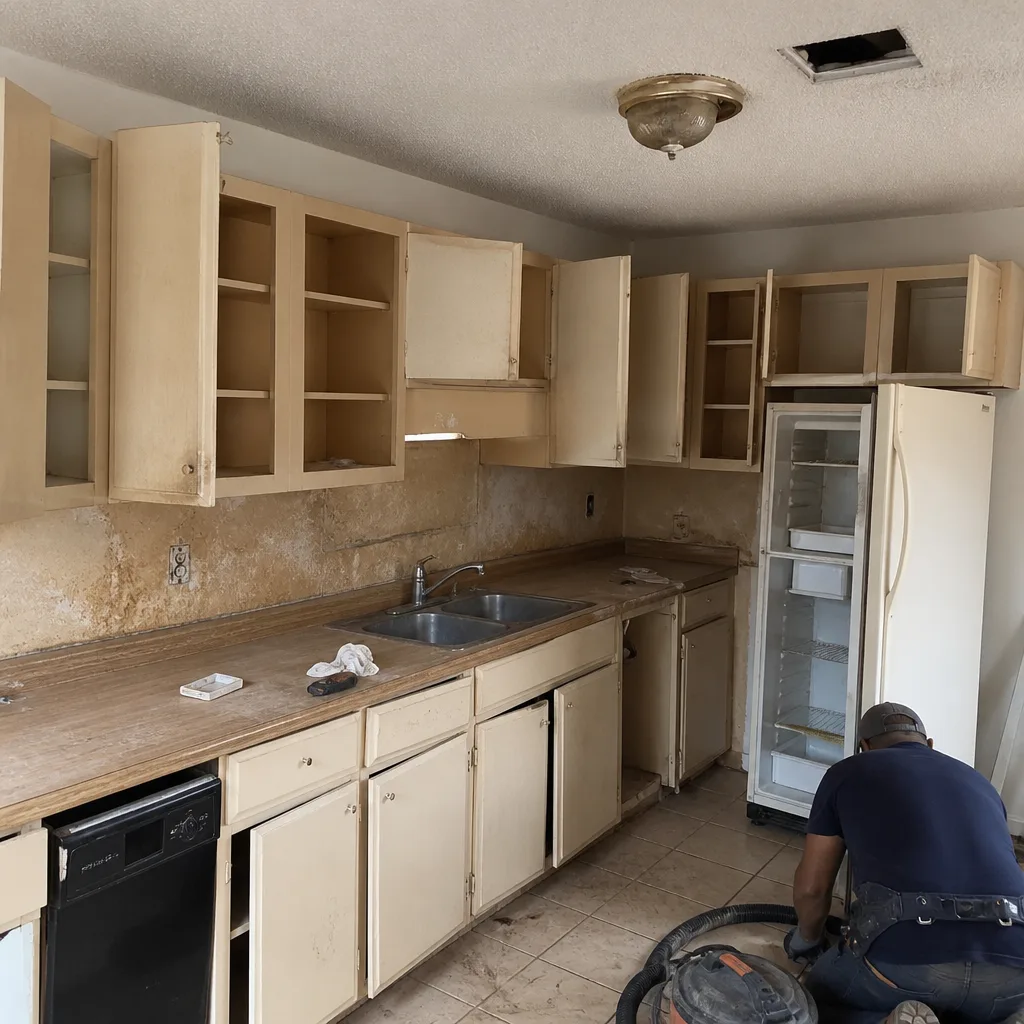 Before
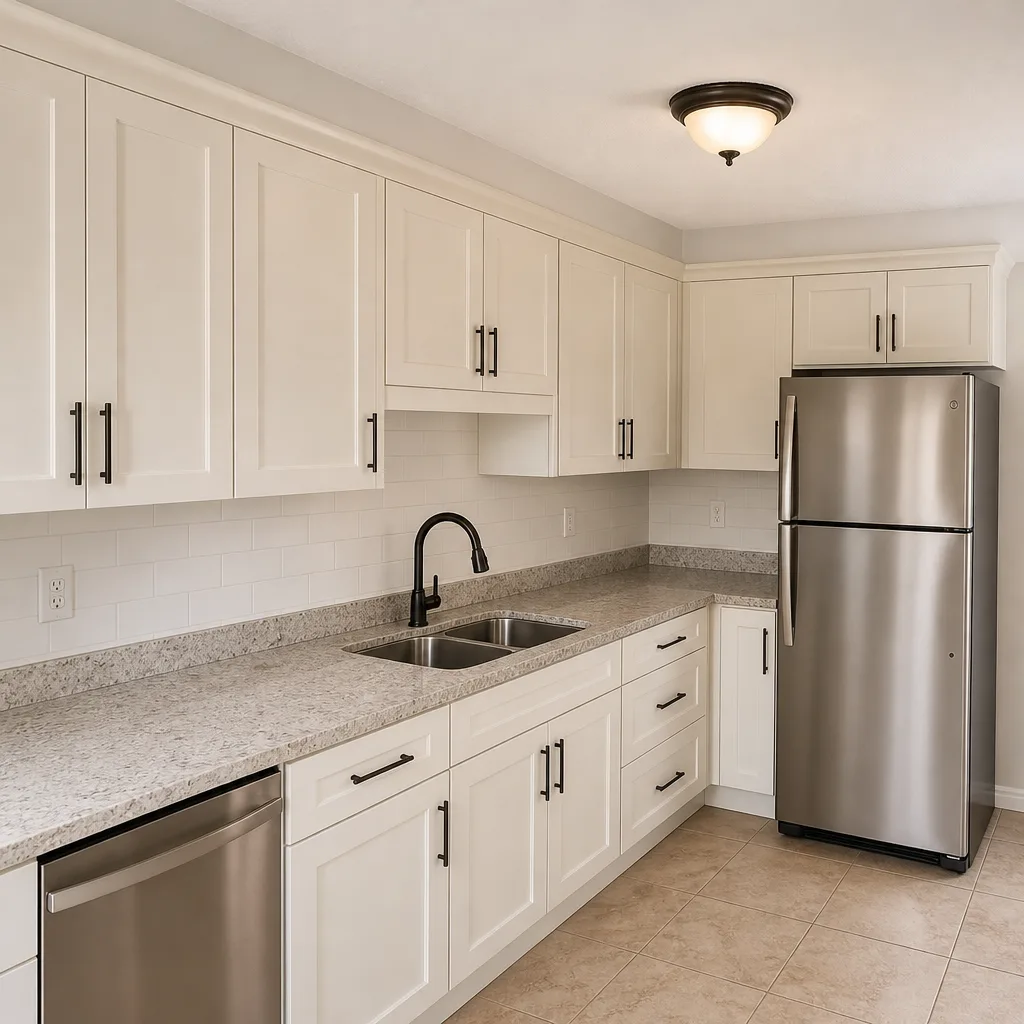 After
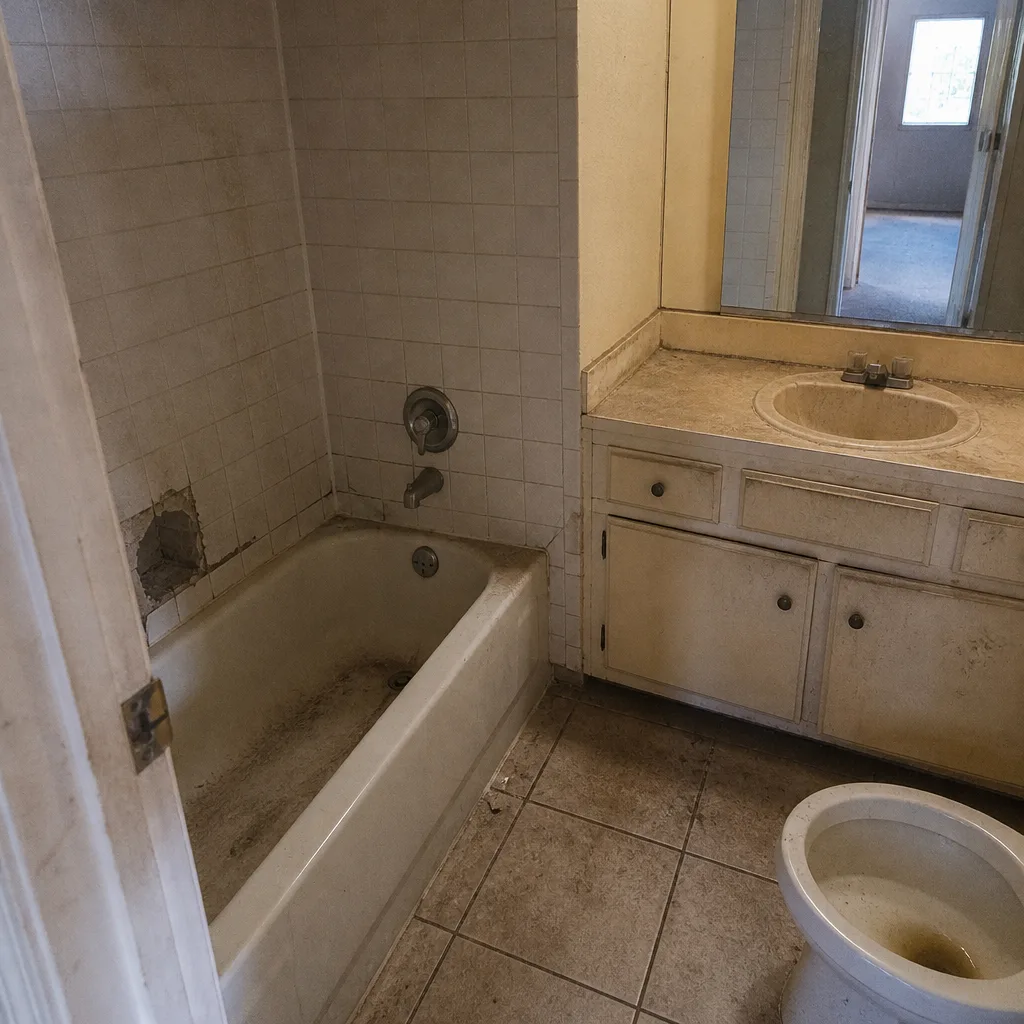 Before
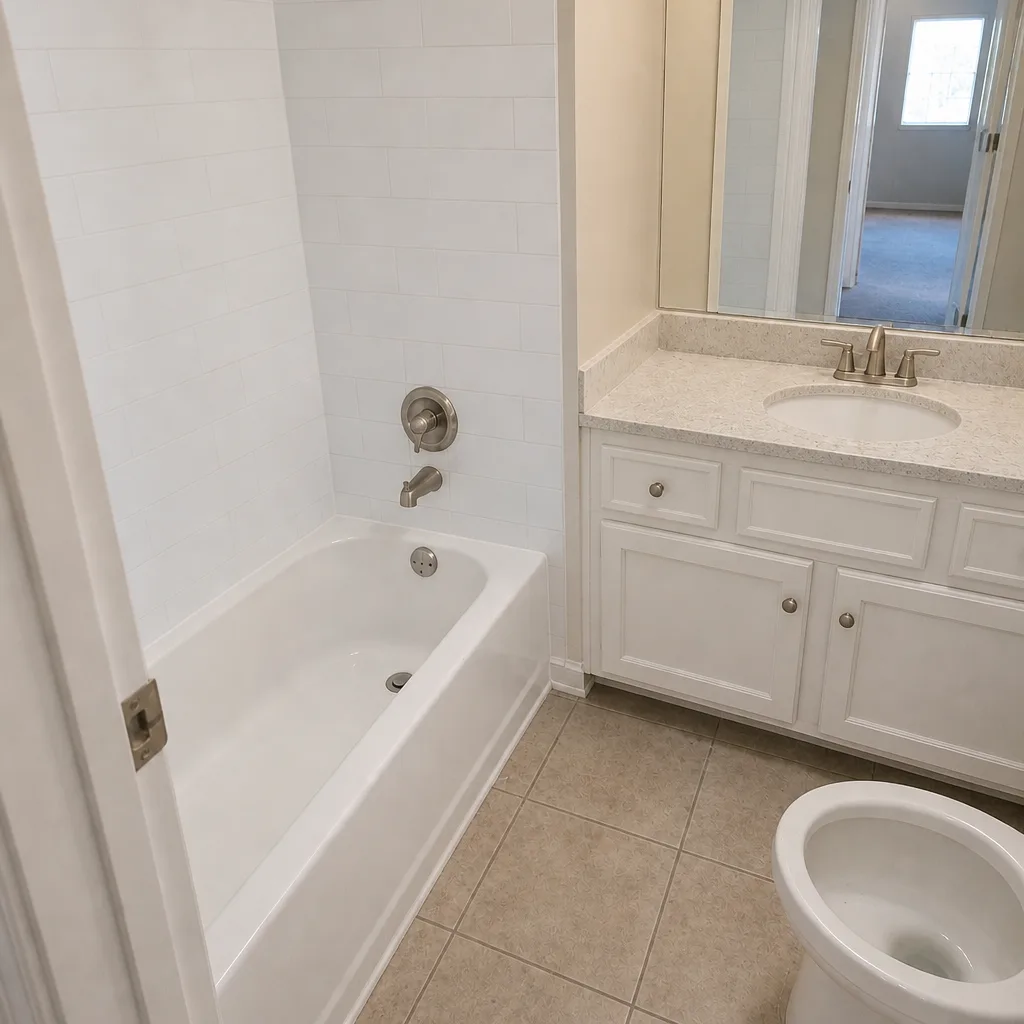 After
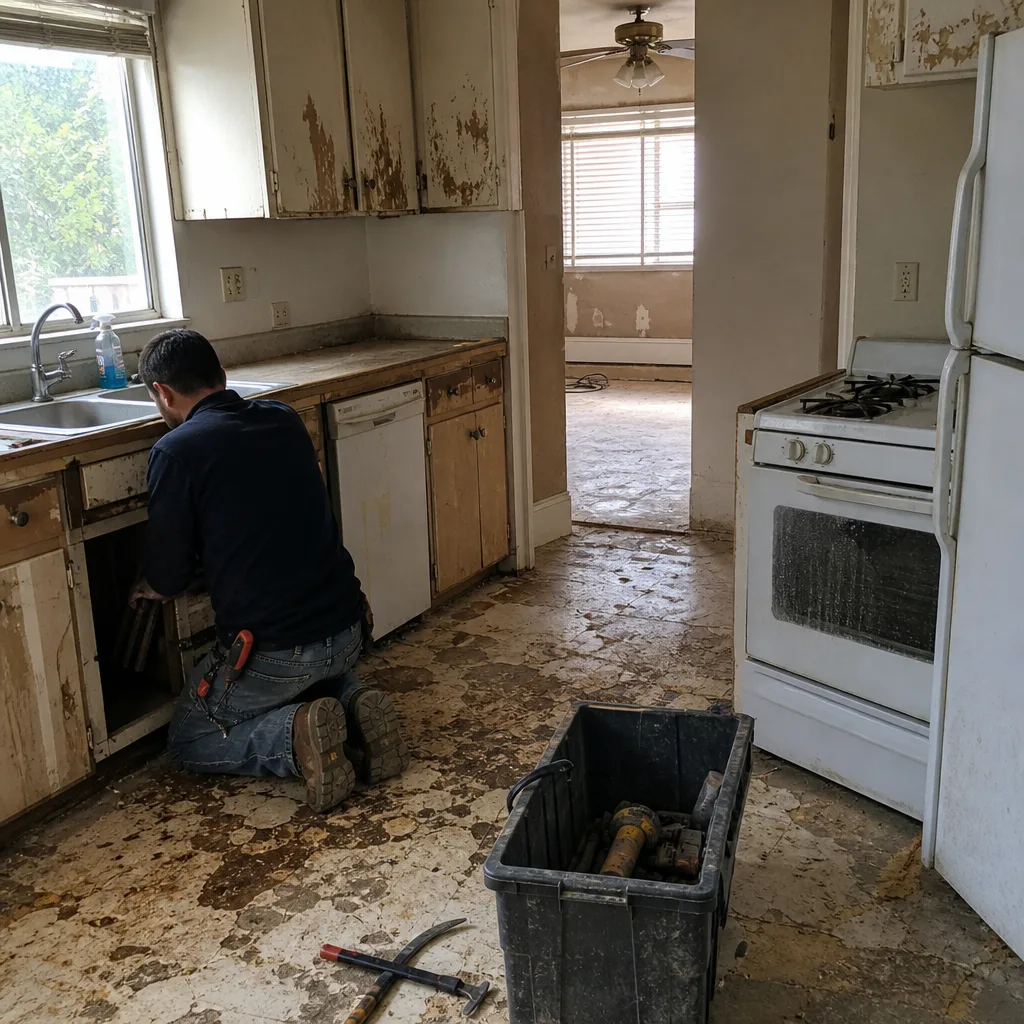 Before
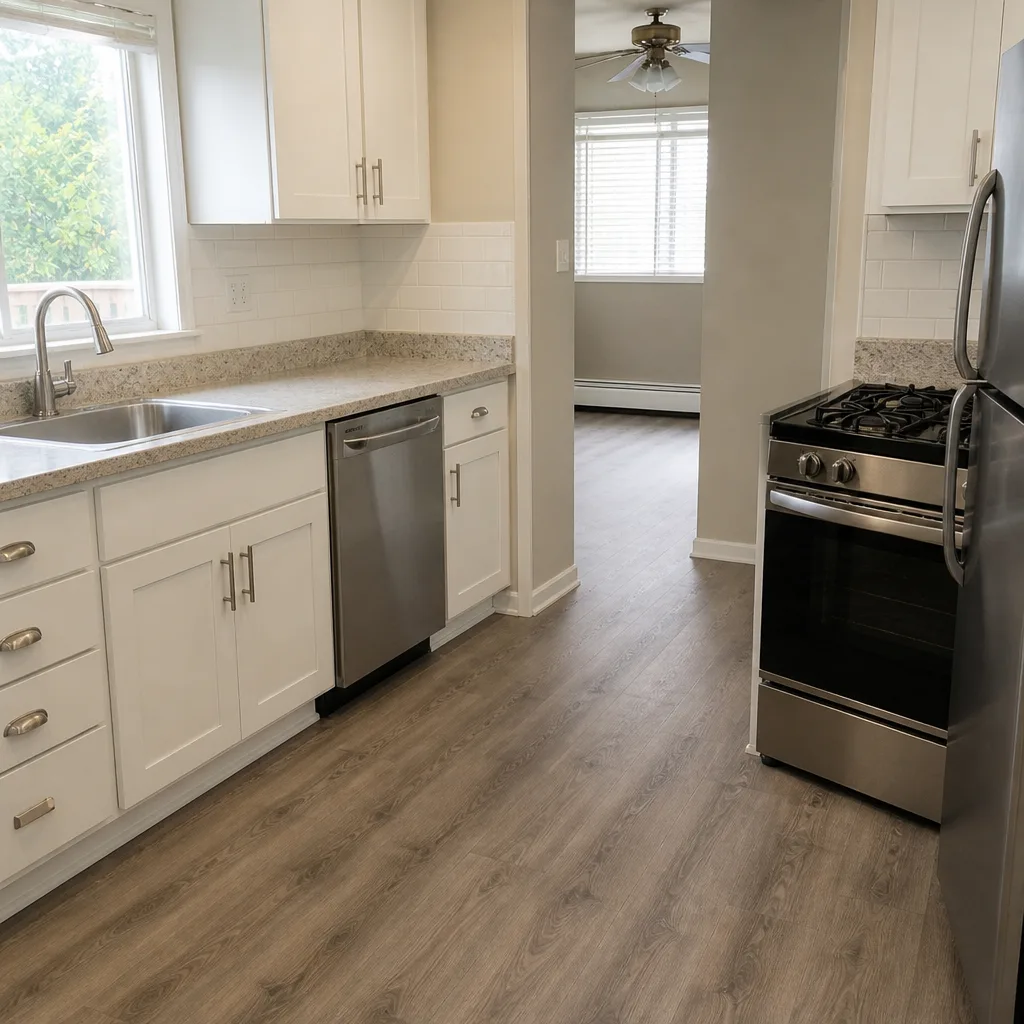 After
When to Call a Professional
Call a professional when any of the following is true: your bathroom floor flexes near the toilet or tub, you can rock the toilet by hand, the subfloor makes any noise when you walk on it, the musty smell shows up specifically when it’s humid outside, or the drywall behind the toilet is soft to the touch. Those are all signs that the remodel is going to include structural repair, not just a finish upgrade. You’ll also want a professional in the room if the project involves moving plumbing, changing the exhaust fan configuration, or replacing a shower pan. Those three are the ones where a homeowner-led job most often produces a problem the homeowner can’t see until it’s already cost them money.
Groundwork Construction Co. of Henderson offers free estimates in Henderson, with live answers on every call, 24 hours a day. Call (844) 320-6757 to schedule one. We’ll walk the room with you, press on the things that need pressing, and put the scope in writing before anyone picks up a tile sample.
Frequently Asked Questions
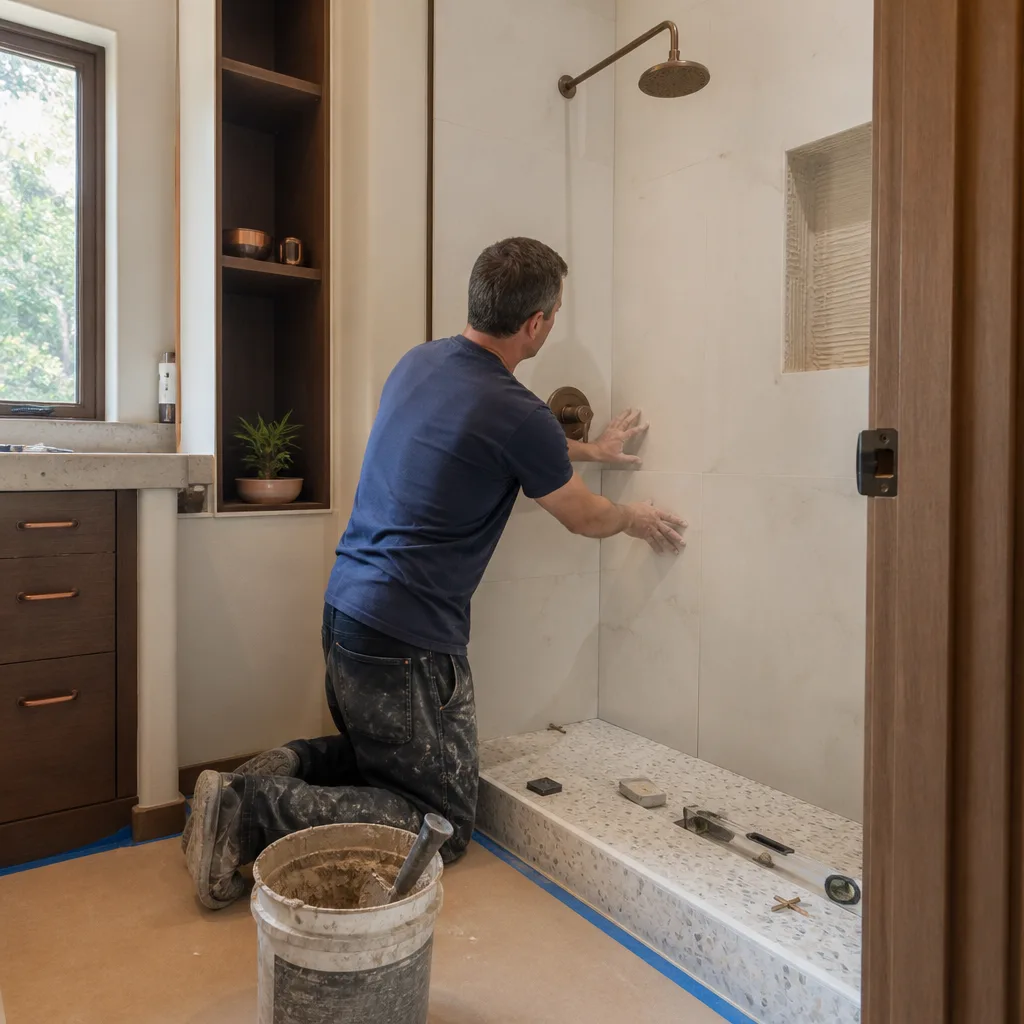
Press firmly along the base of the tub surround, the floor near the toilet, and the drywall behind the toilet. Movement, crunching, or softness means the damage is structural. Cosmetic damage stays at the surface – staining, peeling paint on solid drywall, or worn grout over solid tile. If you can flex the floor by shifting your weight, the subfloor has failed and the project scope changes. Call (844) 320-6757 for a free estimate to confirm what you’re seeing.
A bid that doesn’t mention permits anywhere in the scope or the exclusions is the biggest red flag. It means the contractor either plans to skip the permit (which causes problems at resale) or plans to bill it as a change order later. The second-biggest flag is a lump-sum “labor” line that hides how much work is actually included. Ask for the labor line broken out by trade. Any contractor who won’t do that is telling you the cost, not the scope. Call (844) 320-6757 for a written line-item estimate on your Henderson bathroom.
It’s very likely mold growing in the wall cavity or under the shower pan, and the humidity is reactivating it. The intermittent pattern is the giveaway. A constant smell usually means a slow drain leak; a smell that appears only after showers and fades within a couple of hours means there’s a moisture reservoir behind the wall or floor that’s feeding mold growth. That pattern won’t resolve with a fresh coat of paint or new caulk. Call (844) 320-6757 to schedule a free estimate before you commit to a finish-only remodel.
Subfloor flex near the toilet almost always comes from a failed wax ring that has been leaking into the subfloor for months or years. The plywood or OSB under the tile swells, softens, and loses structural integrity, which is why the floor moves when you stand on it. Treat it as urgent on a calendar timeline, not a today timeline – you have weeks, not days, but you should not install new tile over a flexing subfloor. Call (844) 320-6757 for a free estimate that includes opening the floor to verify.
Yes, in most cases. Any project that moves plumbing, moves electrical, changes the layout, adds a new exhaust vent, or converts a tub to a walk-in shower typically requires a permit in Henderson. A finish-only refresh (new paint, new vanity, no plumbing or electrical changes) usually doesn’t. Ask your contractor directly: “Are permits included, and who pulls them?” If the answer is vague or evasive, get another bid. Call (844) 320-6757 to ask about permits on your specific project – estimates are free.
It will, if the ventilation isn’t addressed during the remodel. A bathroom exhaust fan that’s undersized, vented into the attic instead of outside, or restricted by a long duct run leaves moisture in the room and in the wall assembly, regardless of what’s on the walls. The fix during a remodel is to spec a fan sized to the room, vent it to the exterior with a short duct run, and confirm it actually draws. If your current fan fails the toilet-paper test or has no exterior vent hood, that work belongs in the remodel scope, not an afterthought. Call (844) 320-6757 for a free estimate that includes a ventilation check.
The Bottom Line
The signs that your Henderson bathroom needs real work – and that a particular contractor isn’t the right fit – are all visible before the tear-out. Subfloor flex, musty smells in humid weather, cracked tile that returns after re-grouting, missing line items in a bid, and silence about permits are the five signals worth the most attention. Treat each one as a diagnostic question, not a verdict. Some mean expand the scope and proceed. A few mean pause and get a second opinion. None of them mean pick finishes and hope for the best.
Get the walkthrough right and the rest follows. The right contractor should press on things, open things, go outside to check the vent, and tell you what they can’t see yet. They should quote you a line-item scope that includes permits, ventilation, and subfloor repair as real numbers. And they should put the guarantee in writing before you sign. Our 730-Day Done Right Promise is standard on every project, because if it’s not done right, we make it right.
Ready to talk through your bathroom? Call (844) 320-6757 for a free estimate. Estimates are free, calls are answered by a live person 24/7, and the number you see is the number you pay.
Written by the team at Groundwork Construction Co. of Henderson.