Last updated November 18, 2026
Free written scope consultation - allowances, timeline, and change-order rules on paper before a single trade is scheduled
Driveway & Pavers Maintenance Schedule: What to Do and When
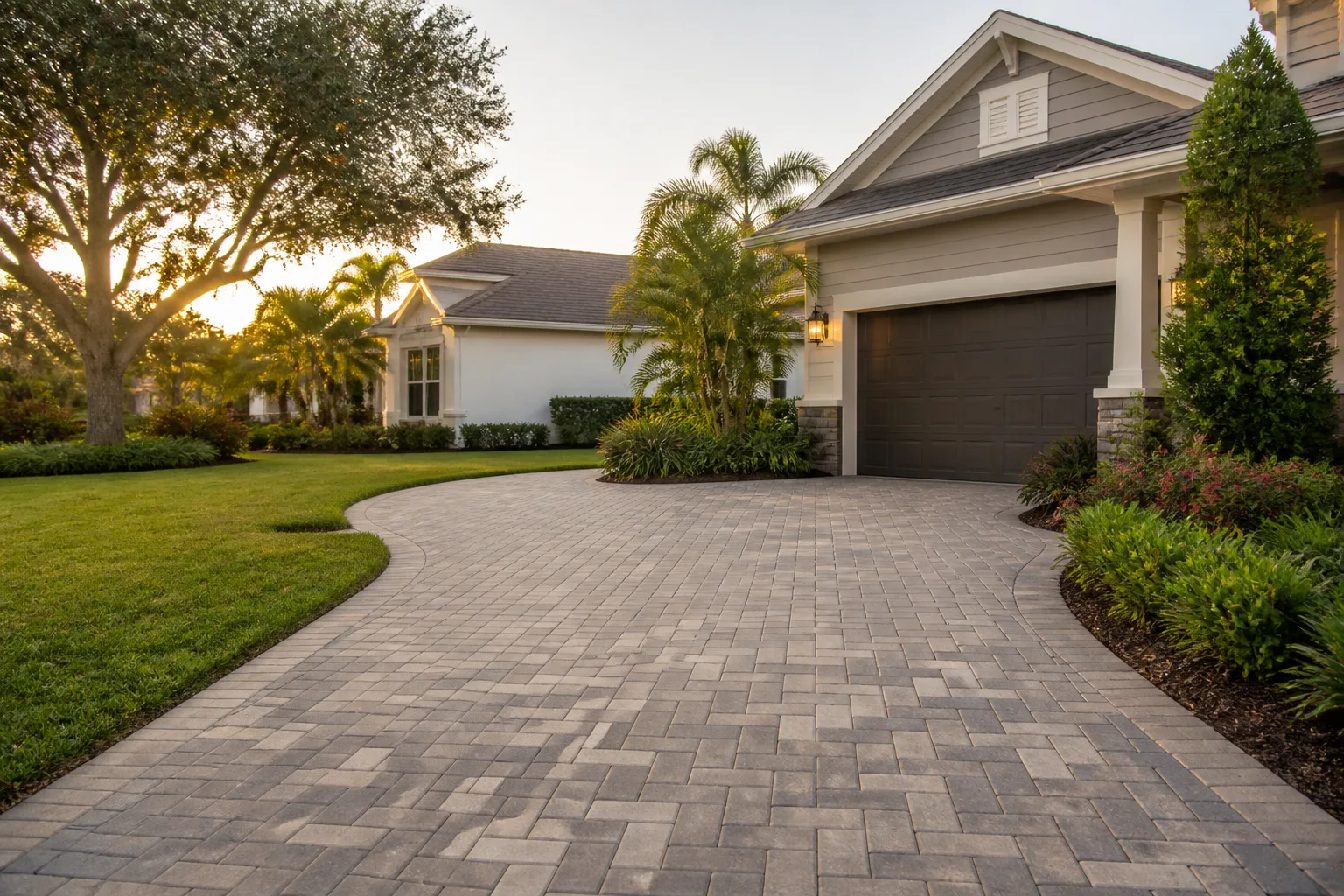
Sealing pavers in July in Henderson is a lot like painting a wall in direct sun. The product skins over before it ever bonds, and you won’t know you wasted the effort until the next season, when the surface starts shedding water in all the wrong places. We’ve seen it on driveways from Anthem to Green Valley: a homeowner buys a bucket of sealer at a big-box store on a 108-degree Saturday, rolls it on, and by October the whole application is chalking off in sheets. This guide lays out a Henderson-specific maintenance calendar built around the desert’s two real enemies, summer UV and monsoon sediment, so your pavers hold their color, their joints, and their warranty.
Quick Answer
The best maintenance schedule for a Henderson paver driveway is twice-a-year deep care plus routine monthly checks: seal in October or November when temperatures drop below 85°F, inspect and refill joint sand every May and again right after monsoon season in September, and skip any sealing between April and September. Power washing stays under 1,500 PSI year-round. Do those things and a properly installed paver driveway will outlast the house’s asphalt neighbors by decades.
Styles & brands we work with
- Kitchen remodeling
- Bathroom remodeling
- Home additions & ADU
- Roofing
- Windows & doors
- Driveway & pavers
- Fence
Table of Contents
- Why a Henderson Paver Driveway Needs Its Own Calendar
- The October – November Sealing Window
- Post-Monsoon Joint Sand Inspection
- How to Test Whether Your Sealer Is Still Active
- Power Washing PSI: What’s Safe and What Voids Warranties
- Month-by-Month Checklist for Henderson Homeowners
- Spotting the Line Between Maintenance and Replacement
- Common Mistakes to Avoid
Why a Henderson Paver Driveway Needs Its Own Calendar
National maintenance schedules were written for temperate climates. Follow one in Henderson and you’ll seal too early in spring (temperatures are already pushing 90 by April), skip the joint sand inspection that matters most here (monsoon sediment), and wash at a PSI that strips the polymeric sand right out of the joints. That’s the wrong calendar for the wrong climate.
Henderson sits in a high-desert basin with a UV index that regularly hits 11 or higher from May through August. That’s the strongest ultraviolet category on the scale, and it’s what breaks down sealers, fades paver pigments, and chalks the surface. On top of that, the valley receives roughly 4 to 5 inches of rain a year, but almost all of it arrives in violent bursts between July and September. A single monsoon cell can drop an inch in twenty minutes, sheet water across your driveway, and push fine silt and caliche dust into every open joint.
So the maintenance rhythm looks different here. The threats aren’t freeze-thaw like the Midwest or moss like the Pacific Northwest. They’re UV bake from May to September and sediment loading from July to September. Everything in this guide traces back to those two forces. If you’re used to a northern maintenance routine, wipe it. The desert writes its own rules, and we’ve watched the difference play out on driveways across driveway & pavers in Henderson jobs for years.
The October – November Sealing Window
Seal your Henderson pavers between mid-October and late November. That’s the window when daytime highs drop into the 70s and low 80s, overnight lows settle in the 50s, and the UV index eases off its summer peak. Sealant needs those conditions to cure evenly. Apply it in July and the surface cures before the carrier solvents fully flash off, trapping moisture and creating the chalky, peeling mess we described at the top.
Here’s what the numbers look like for the sealing window in Henderson:
- Ideal daytime high: 65°F to 85°F. Above 90°F and the sealer starts flashing off too fast.
- Ideal overnight low: 50°F or above. Anything below 45°F and curing stalls out for days.
- UV index: Below 8 during application. Henderson sits at 11+ through August.
- Rain-free days needed: 24 to 48 hours before and after application.
October and November hit all four of those marks in most years. March and early April are the second-best window, but you risk a late heat spike. If you’re going to seal in spring, watch the ten-day forecast closely.
Two coats is the standard for a desert driveway, applied roughly two hours apart. Wait 24 hours before driving on it and 48 hours before parking anything heavy. If you have an asphalt-to-paver transition, tape off the asphalt, because the solvent-based products most installations use will soften fresh asphalt.
A note on sealer types
Solvent-based acrylic sealers give the deepest color enhancement but need the full 24-hour cure and are the pickiest about temperature. Water-based sealers are more forgiving in cooler weather but offer less color pop. Penetrating sealers sink in and leave a natural look, but they still need to go down in the October window because they depend on the substrate being dry, and Henderson soils stay damp for days after a monsoon. We favor water-based acrylics for most residential installations here because they give the best balance of UV protection and repairability.
Post-Monsoon Joint Sand Inspection
Every September, right after the last monsoon cell rolls through, walk your driveway and check the joint sand. Monsoon season is when Henderson gets its real moisture, and sheet flow across the pavers picks up silt and scours sand out of the joints. What looks like a clean driveway in June can have 30% to 50% of its joint sand missing by the end of August. If you don’t refill it, the pavers start rocking, weeds sprout, and ants move in.
Here’s the inspection protocol we use on Henderson driveways after monsoon season:
- Walk the entire perimeter one joint at a time. Look for visible dips or openings. A properly filled joint shows sand 1/8-inch below the paver face, not sand flush to the top or an empty channel.
- Probe with a screwdriver. Gently push a flathead into the joint at three random spots. If it sinks more than a quarter inch, the joint needs refill.
- Check the edges. The joint along the garage apron and the street curb takes the brunt of monsoon sheet flow. These fail first, and if the joint opens there, water gets under the pavers.
- Look for ant mounds and weed sprouts. Both are signs the sand below has loosened. Henderson’s harvester ants love a sandy joint under a hot paver, and once a colony is in, it excavates the sand bed under the whole section.
- Refill with the correct sand. Polymeric sand for joints 1/8-inch and wider, or fine silica sand for narrower joints. Fill, sweep, compact with a plate compactor, then mist to activate the polymeric binder.
Don’t skip the compacting step. Polymeric sand that’s swept but not compacted will wash out at the next monsoon. And if ants have already colonized, treat the joint with a granular ant bait before refilling, or you’ll be refilling the same joint every fall.
How to Test Whether Your Sealer Is Still Active
You can test your existing sealer in thirty seconds with a cup of water. Pour a small puddle onto the pavers in a shaded spot. If the water beads up and rolls off, the sealer is intact. If it soaks in within a few seconds, that section needs resealing. That’s the whole test.
Do this bead test in three spots: one near the garage door (shade), one in the middle of the driveway (full sun), and one along the street where traffic concentrates. Results often vary, and that tells you a lot. If only the sun-exposed section fails, that’s UV degradation and normal for a three-year-old sealer in Henderson. If the shaded section fails first, the original application was likely too thin, and you’re resealing earlier than you should have to.
You’ll typically get two to three years out of a good solvent-based sealer in full Henderson sun, three to four out of a water-based one applied correctly. Anything less and either the product was wrong for the climate or the application was rushed. Every reseal you skip extends the life of the pavers by preventing another wasted application.
The bead test is also your defense against bad sealer sales. Some contractors push annual resealing regardless of condition. If your bead test still shows beading, you don’t need it. Wait, save the money, put it toward the joint sand refill instead.
Power Washing PSI: What’s Safe and What Voids Warranties
The safe power washing pressure for a Henderson paver driveway is 1,200 to 1,500 PSI with a wide fan tip, never above 2,000 PSI. Above that, you start stripping the polymeric sand out of the joints, and on a sealed driveway you can etch the surface film. Most consumer pressure washers sold at big-box stores top out around 2,500 to 3,000 PSI, which is exactly the range that will damage your investment.
Here’s the pressure map we use:
- 1,000 – 1,500 PSI with a 40-degree tip: Safe for pavers, safe for polymeric sand.
- 1,500 – 2,000 PSI: Edge of safe. Do not hold the wand in one place, keep it moving.
- 2,000 – 2,500 PSI: Strips fresh joint sand. Etches older sealer.
- 2,500+ PSI: Voids most paver and joint sand warranties. Can chip the paver edge, creating a failure point for water infiltration.
Distance matters as much as PSI. Keep the wand 12 to 18 inches off the surface, work in smooth overlapping passes, and never aim a zero-degree tip at the pavers, which is a laser-beam that will score the surface in a single line. Pre-treat oil stains with a citrus degreaser, let it sit 10 minutes, then wash. Henderson’s hard water leaves mineral spots if you don’t squeegee or blow the surface dry after washing, so plan to run a blower over the driveway after the rinse.
Sealing must come after washing. If the driveway needs both, wash and let it dry 48 hours in October, then seal. Washing after sealing just removes the sealer you paid for.
Month-by-Month Checklist for Henderson Homeowners
This is the calendar we’d give a homeowner if we handed them a printed sheet. It’s built for a Henderson climate, not a generic Southwest template. Print it, tape it to the inside of the garage door, check it off.
- January: Walk the perimeter alphabet of the driveway, check for any paver lift from winter rain. Check the edge restraints along the garage apron and street. Do nothing else. This is the quiet month.
- February: Do the bead test to plan for the season. Clear any leaf and debris from the joints. Note cracks or shifted pavers for repair when the weather warms.
- March: Optional spring reseal in the first two weeks if the bead test failed. Otherwise, spot-clean oil stains and check the transition to the garage apron for loosened joint sand.
- April: Run the first full joint sand inspection of the year. Refill any low sections. This is the fast-warm-up month, so watch for the first weeds.
- May: Deep check before summer. Address ant mounds with granular bait. Confirm edge restraints are tight. Note any sealer thinning for the fall reseal.
- June: Monitor only. Do not seal. Do not pressure wash above 1,500 PSI. Keep the driveway clear of debris that traps heat.
- July: Post-monsoon inspection begins with the first cell. Sweep off any sediment before it gets walked in. Do not wash during the heat of the day.
- August: Repeat post-monsoon inspection after each significant rain event. Refill joints once the sand loss has stopped accumulating, typically mid-September.
- September: Post-monsoon deep inspection. Full joint sand refill. Bed cleanup. Ant treatment if colonies have returned.
- October: The main event. Power wash at 1,200 – 1,500 PSI in the first two weeks if the driveway is dirty, then seal in the second half once it’s dry. Do not seal if you’re still seeing highs above 85°F.
- November: Second-chance sealing month if October got away from you. Complete any seal touch-ups, sweep, and store the leftover sand indoors (it sets up in the open bag).
- December: Bead test the newly sealed surface to confirm coverage. One final visual inspection of edge restraints before the winter quiet.
That’s the whole year. If you do nothing else, do the October seal and the September joint sand refill. Those two jobs alone will carry the driveway for the other ten months.
Spotting the Line Between Maintenance and Replacement
Maintenance covers a lot, but it can’t fix a bad structural bed. If you see any of these signs in Henderson, you’re past maintenance and into repair or replacement territory:
- Rocking pavers across large sections. One or two isolated pavers is a joint sand refill. Ten pavers in a line rocking means the base has failed.
- Settlement dips that hold water after a monsoon. Water pooling in the driveway for more than 24 hours means the base has eroded.
- Widespread spalling or chipping on the top surface. Usually UV damage or freeze damage secondary to water infiltration. Sealers can’t reverse it.
- Efflorescence that comes back every month. White powdery salt stains that recur indicate water is traveling through the bed.
- Joint sand that washes out within weeks of a refill. Something’s flowing under the pavers and pulling the sand with it.
For most Henderson homes, a 12- to 15-year-old paver driveway that’s been maintained on the October-September rhythm still has 20 or more years of life left in it. A driveway that’s never been sealed, sits on a base installed during a cheap build cycle, and has been pressure washed at 3,000 PSI every year by a well-meaning homeowner is often ready for replacement at year 15. The difference is usually the maintenance, not the pavers.
If the pavers are sound but the driveway layout no longer fits how you live, an adjustment is on the table. We handle that work as part of our home additions & ADU in Henderson projects when a new garage, entry walk, or turnaround needs its hardscape built in.
Common Mistakes to Avoid
- Sealing in the summer heat. The single most common Henderson mistake. July sealing wastes a $300 to $600 sealer application. Wait for the October window and the effort actually sticks.
- Power washing at full pressure. Most homeowners use the 2,500-plus PSI setting because it “cleans faster.” It also strips polymeric sand and voids any paver warranty you have. Cap at 1,500 PSI.
- Skipping the post-monsoon joint sand refill. Monsoon season is the only real moisture event in Henderson, and it always takes sand out. Refill every September, no exceptions.
- Using beach sand or play sand for joints. Wrong grain size, wrong binder, washes straight out. Polymeric sand or proper fine silica only.
- Sealing over a dirty or wet driveway. Traps moisture and stains in place. Wash, let dry 48 hours in October, then seal.
- Ignoring ant colonies in the joints. Henderson harvester ants excavate sand under the pavers. A $20 bait treatment stops a $2,000 base repair.
- Assuming a national maintenance schedule fits Henderson. April here is a sealing month most national calendars skip; August here is a wash-only month most calendars allow full cleaning. Build the calendar around local climate.
See the difference
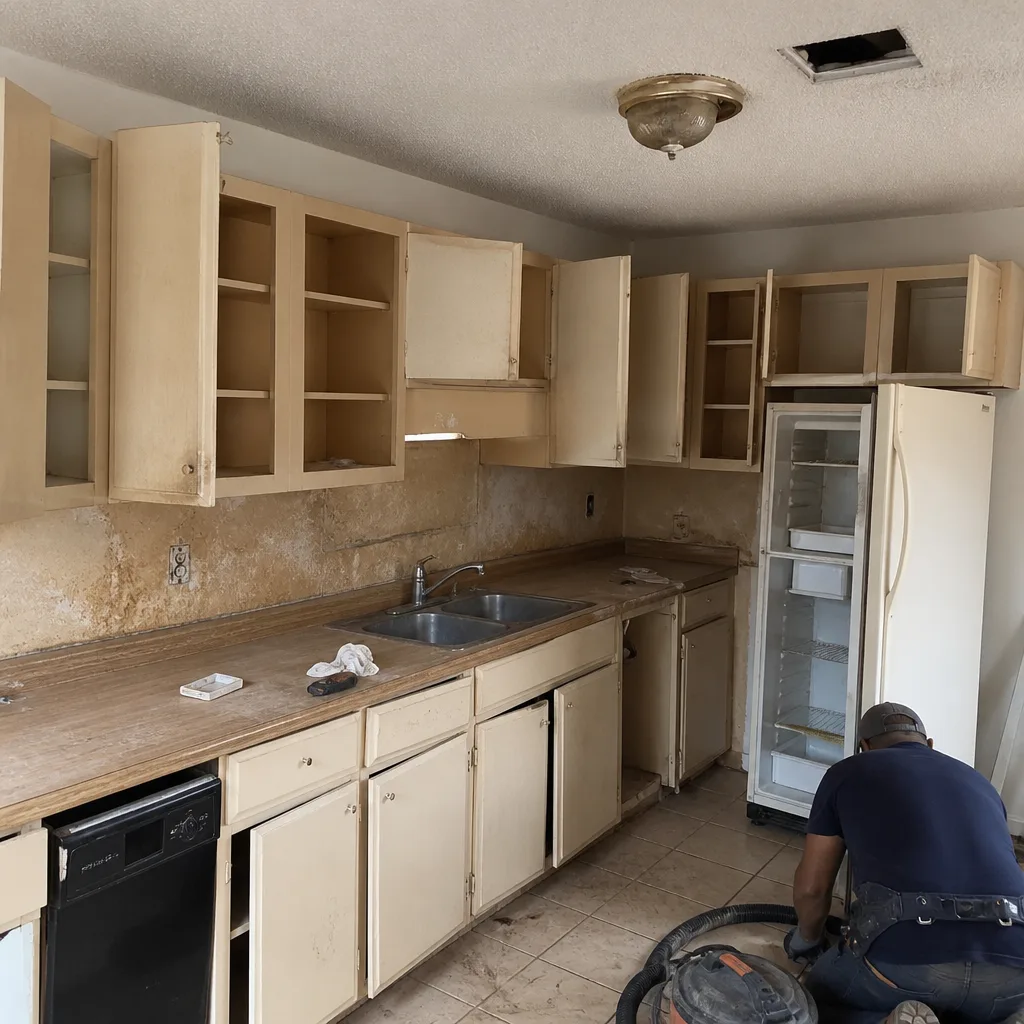 Before
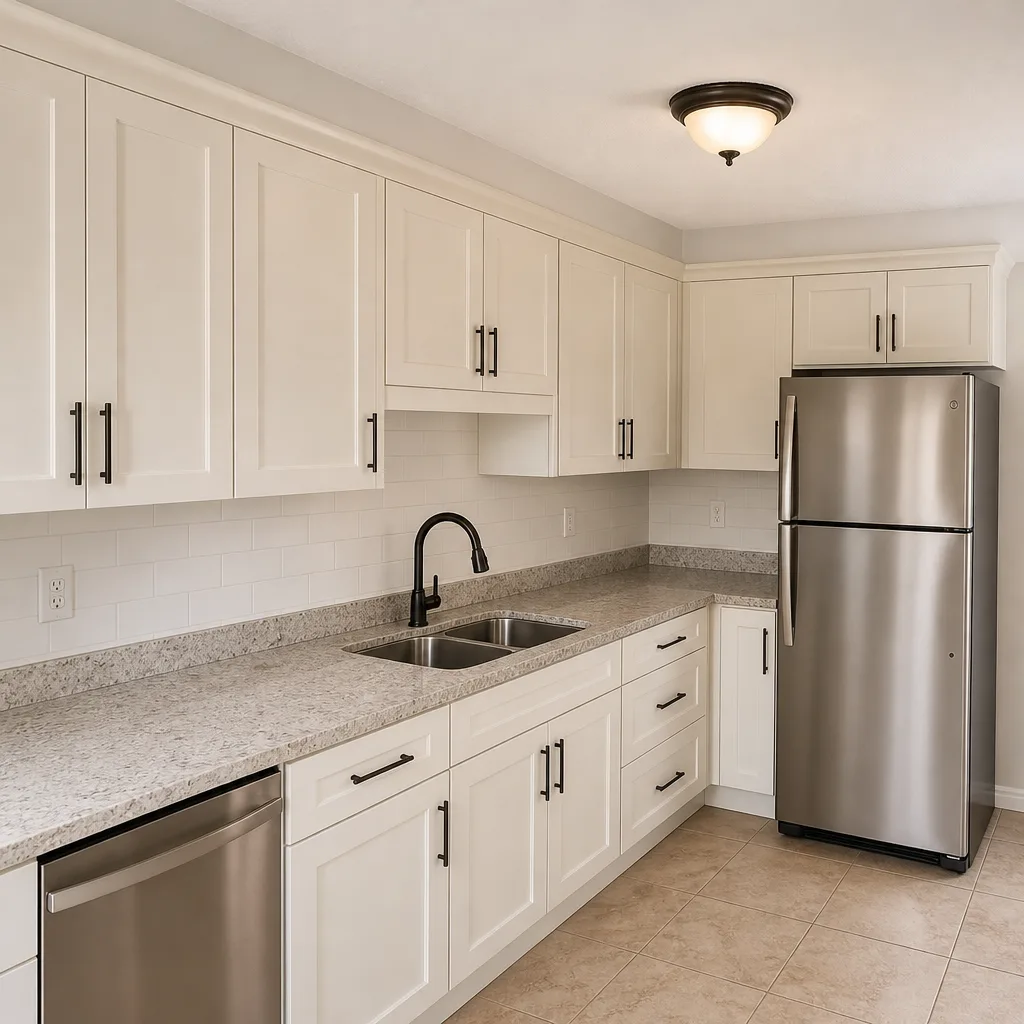 After
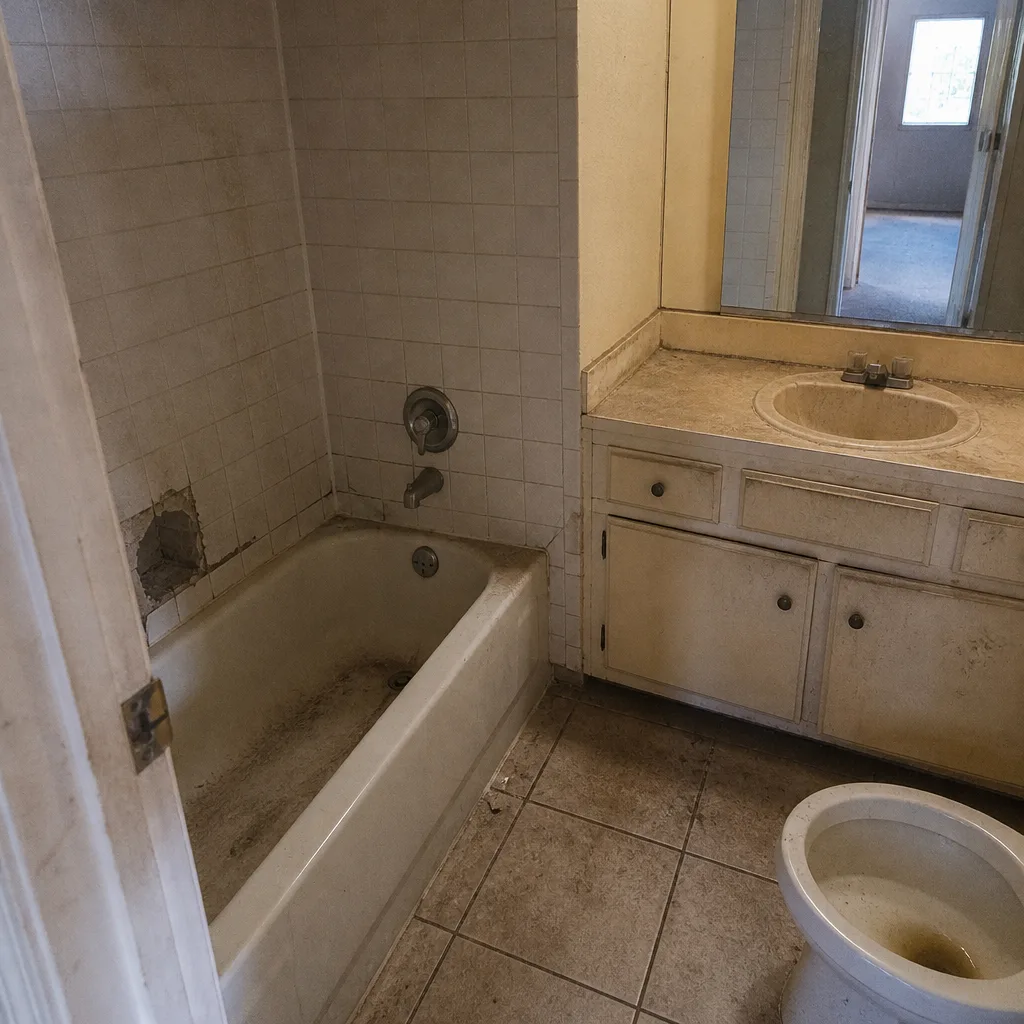 Before
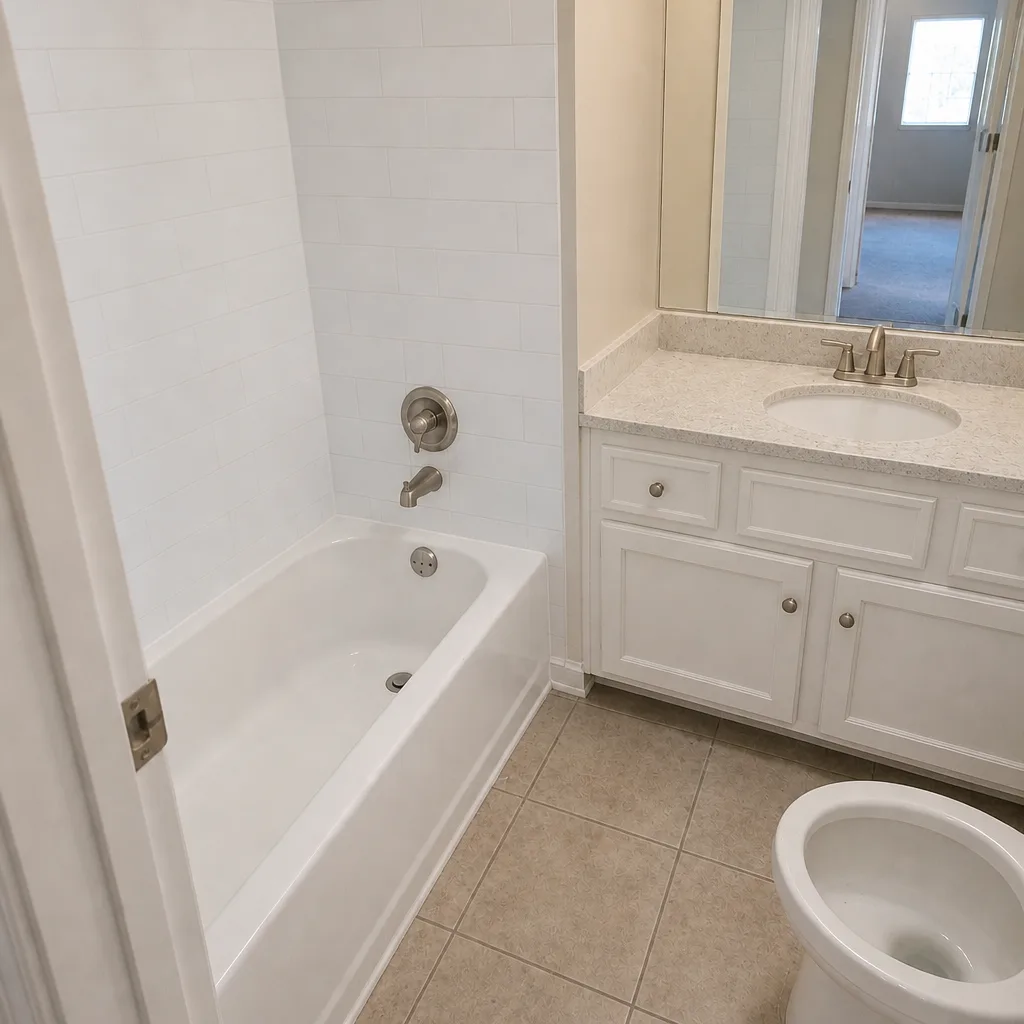 After
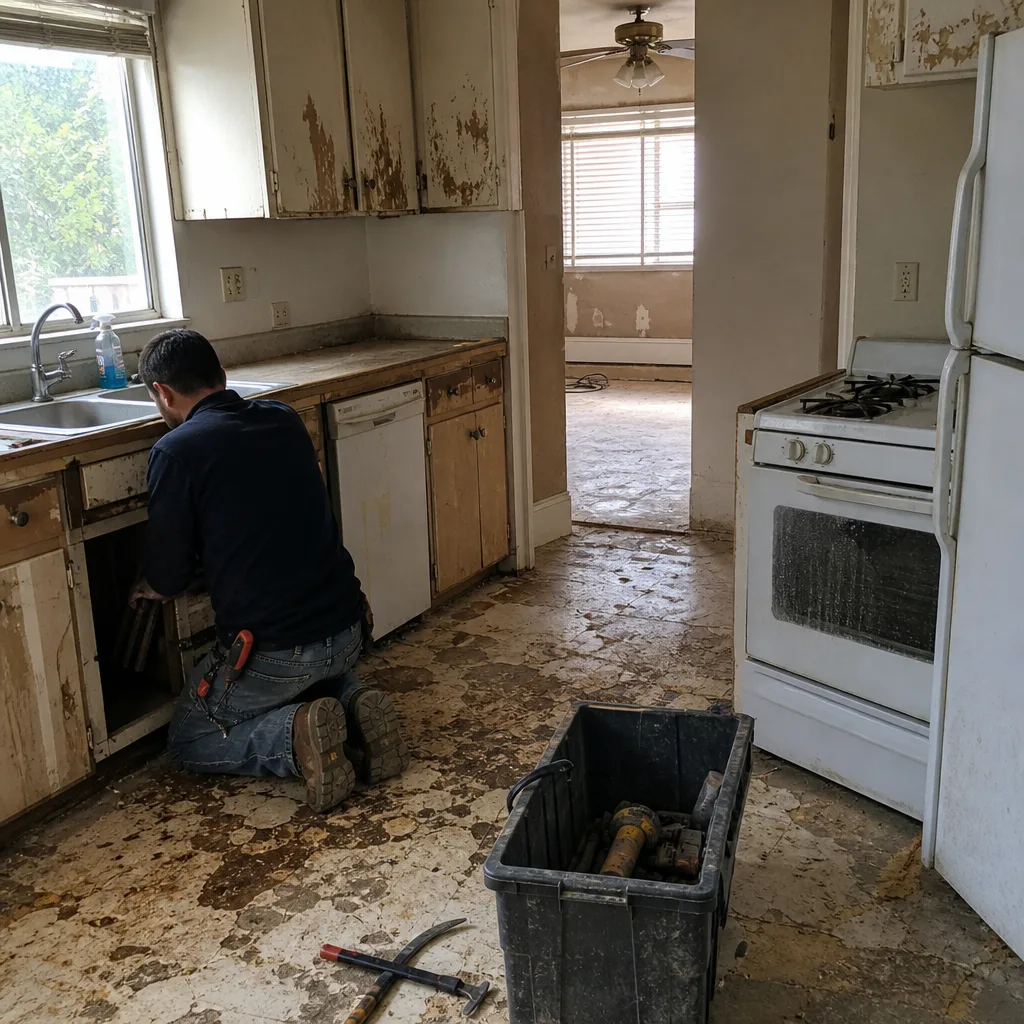 Before
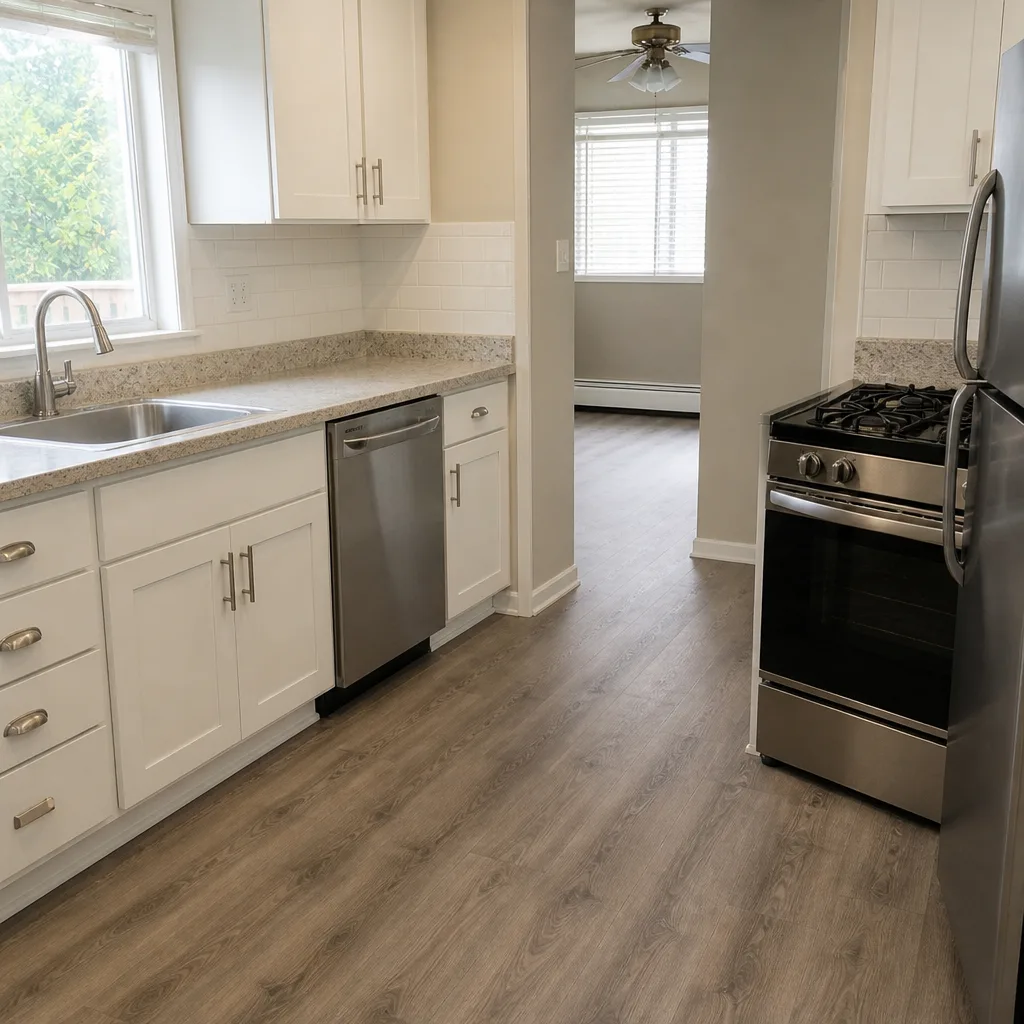 After
When to Call a Professional
Book a professional inspection when you see paver rocking in groups, settlement that holds water after a monsoon, efflorescence that returns after treatment, or joint sand that fails within weeks of refill. Those point to a structural base issue, and no amount of weekend maintenance will fix them. Call us too if your driveway is more than 15 years old, has never been sealed, and you want an honest assessment of whether it’s still worth investing maintenance into or whether resealing is throwing good money after bad.
Groundwork Construction Co. of Henderson offers free estimates in Henderson. Our technicians have up to 12 years of experience with desert-specific paver maintenance, and our work is backed by the 730-Day Done Right Promise on any repair or replacement we perform. Call (844) 320-6757 to schedule your free estimate.
Frequently Asked Questions
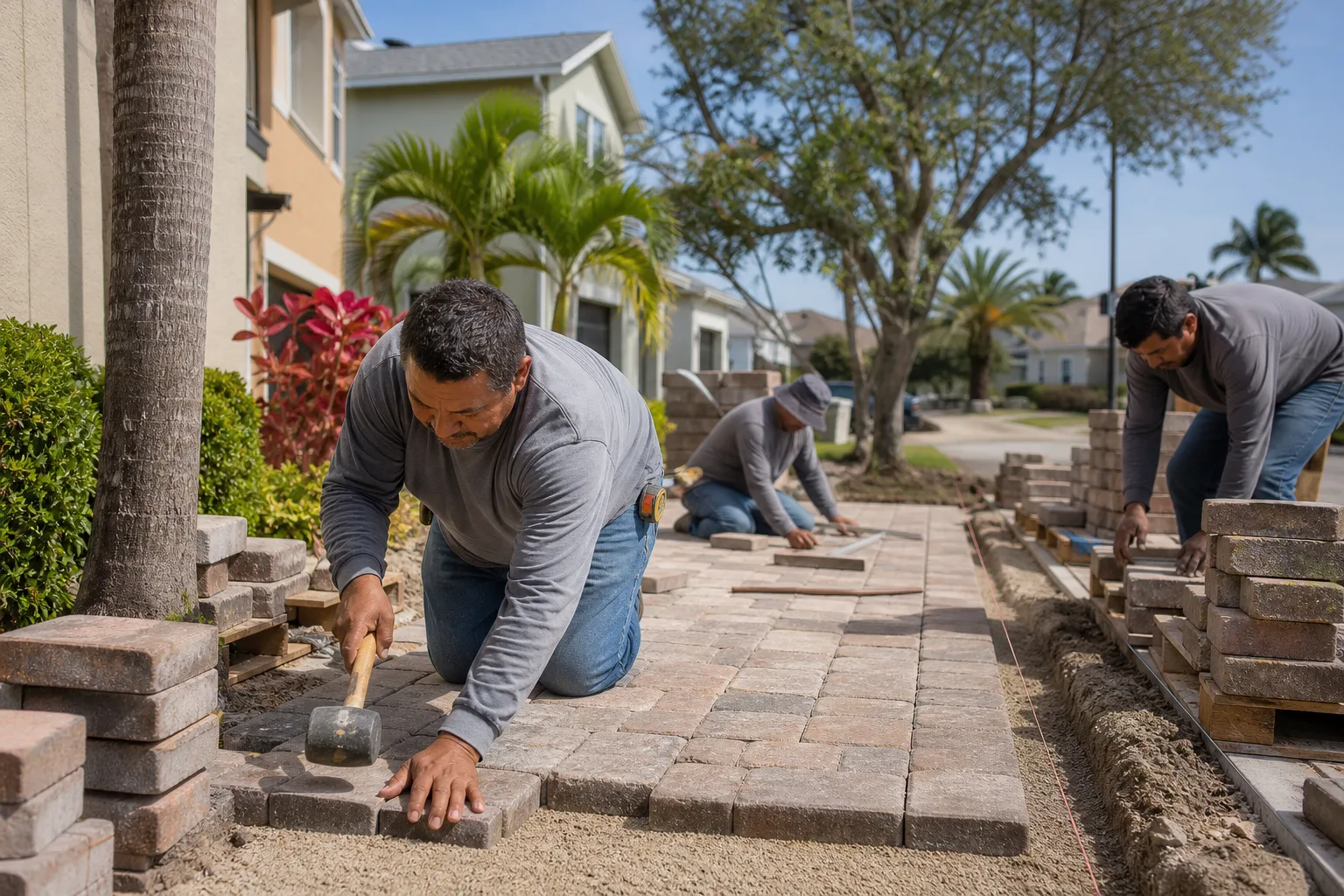
Seal your Henderson pavers in October or November. Those two months reliably sit in the 65°F to 85°F daytime range with UV index below 8, which is what acrylic and penetrating sealers need to cure correctly. March is the fallback window if October slips, but watch for a late heat spike that can flash off the product. Call (844) 320-6757 for an exact quote on sealing this season – estimates are free.
Reseal every two to three years with a solvent-based acrylic sealer, or three to four years with a properly applied water-based one. Henderson’s UV index of 11+ from May through August degrades sealer faster than most of the country, so use the water-bead test rather than a fixed calendar. If the water beads, you don’t need to reseal yet.
Yes, if you keep the pressure between 1,200 and 1,500 PSI with a wide 40-degree fan tip and hold the wand 12 to 18 inches off the surface. Anything above 2,000 PSI strips the polymeric joint sand and can void the warranty on your installation. If you’re not sure how to control the pressure, hire out the wash.
Polymeric sand is best for joints 1/8-inch and wider, which is most Henderson residential driveways. It binds with water and resists wash-out during monsoon season much better than plain silica sand. For narrow joints, use a fine-grade silica. Never use play sand; the grain size is wrong and it will disappear after one summer storm.
Two causes in Henderson: monsoon sheet flow scouring the joints, and ant colonies excavating the sand bed. Fix the source before refilling. Check for ants along the edge joint near the garage apron and the street curb, bait if you see them, then refill with polymeric sand and compact it correctly. If sand still fails after a proper refill, the base has a drainage problem and needs a professional look.
No, not on a Groundwork job. We provide no-hassle upfront pricing, and the number you see on the estimate is the number you pay. That applies to paver maintenance, sealing, joint sand refill, and any repair we quote for your Henderson driveway. Call (844) 320-6757 to schedule a free estimate, and we’ll walk the driveway with you and give you a written line-item quote on the spot.
The Bottom Line
A Henderson paver driveway does best on a two-event calendar: seal in October or November, and refill joint sand every September right after monsoon season. That’s it. Those two jobs, plus a 1,500 PSI wash before sealing and a 30-second water-bead test to confirm the sealer’s still holding, will extend the life of your pavers by decades. Skip the July sealing, skip the high-PSI wash, skip the national maintenance schedules written for other climates. Your driveway was installed for a desert. The maintenance should match it. Call (844) 320-6757 to schedule a free estimate and put a Henderson-built maintenance plan in writing.
For the broader picture of what we build across the property, including hardscape that integrates with fencing and structural additions, our Groundwork Construction Co. of Henderson home page lays out the full scope, and our fence installation in Henderson work pairs naturally with paver driveways and entry walks. If you’re considering a bigger hardscape overhaul, that’s where we start the conversation.
Written by the team at Groundwork Construction Co. of Henderson.