Last updated November 18, 2026


Free written scope consultation - allowances, timeline, and change-order rules on paper before a single trade is scheduled
Driveway & Pavers Warning Signs Every Homeowner Should Know
That one sunken spot at the edge of your paver driveway? It looks like a small dip you could ignore. It’s actually the tip of a base failure that has already spread underground, often three feet or more in every direction. By the time the surface tells you something is wrong, the soil underneath has been quietly working against you for a year or more. We’ve seen Henderson homeowners spend $400 on a spot fix that buys them six months, when a rebuilt section of base would have ended the problem. The gap between the two is what this guide is built to help you close.
You’ll learn the five visual patterns that matter, how to run a 10-minute drainage test with nothing but a straight edge and a garden hose, and which warning signs buy you a month and which ones mean calling this week.
For the full scope of what a driveway and pavers project involves in Henderson, our team also has an in-depth driveway and pavers guide for Henderson homeowners worth reading alongside this one.
Quick Answer
The most reliable warning signs of driveway paver failure are rocking pavers, edge creep, widening joint lines, low spots near drains, and surface pitting – and most of them appear 12 to 18 months before the base gives out. A single sunken edge section, washed-out joint sand under weeds, or a low spot that holds water after every storm is a signal that the base underneath is already moving.
Styles & brands we work with
- Kitchen remodeling
- Bathroom remodeling
- Home additions & ADU
- Roofing
- Windows & doors
- Driveway & pavers
- Fence
Table of Contents
- Why Early Warning Signs Matter More Than the Failure Itself
- The Five Visual Patterns That Signal Base Failure
- How to Run a 10-Minute Drainage Test
- Why Weeds in Joints Are a Secondary Sign (And What the Primary Sign Is)
- Henderson-Specific Warning: Caliche Heave vs. Normal Settling
- Act Now vs. Monitor: The Decision Guide
- Repair vs. Rebuild: What the Damage Tells You
- Prevention: What a Base Done Right Looks Like
Why Early Warning Signs Matter More Than the Failure Itself
Almost every paver failure we investigate in Henderson started as a base problem, not a paver problem. The pavers themselves are usually fine. Interlocking concrete pavers from a quality manufacturer shouldn’t crack or break under normal residential use for decades. What moves is the dirt beneath them.
Here’s what that means for your budget. A single repaired section where the base has been re-compacted and the pavers relaid typically runs a few hundred dollars. A rebuild that has to lift and replace the full base layer under a failed driveway runs into the thousands. The warning signs in this guide live right in that window between the two.
Beneath the pavers, the typical Henderson driveway has a layer of compacted aggregate base, usually around four to six inches, laid over native soil that was prepped before everything else went in. When that base stays dry, stable, and properly compacted, pavers sit flat for a very long time. When water gets under it, or when the native soil underneath swells and shifts, the base begins to move. The surface responds weeks or months later.
The single most expensive mistake we see from homeowners in Henderson is treating a surface symptom – a rocking edge paver, a tiny low spot – as a cosmetic problem. That’s a repair being sold when a rebuild is needed, and it comes back every time.
If you’re weighing a repair against a larger project, the same planning advice that applies to home additions and ADUs in Henderson applies here – figure out what the foundation is doing before you build anything on top of it.
The Five Visual Patterns That Signal Base Failure
Not all paver problems look the same. Each visual pattern below corresponds to a specific structural condition. Learning to read them is what separates a $400 fix from a $6,000 rebuild.
1. Rocking pavers
A paver that shifts underfoot is sitting on a void. The base has compacted unevenly beneath it, or water has washed out the fine aggregate right below the paver. One rocking paver is normal and often fixable with a reset. A cluster of rockers in a two-foot radius means the void is larger than the surface shows. If the rocking has spread past that, the base under that entire area has lost its integrity.
2. Edge creep
Edge creep is when the outermost row of pavers along the driveway edge has begun migrating outward, away from the field. You’ll see gaps opening behind the edge restraint, or the pavers pushing into the adjacent landscaping. This is a restraint failure combined with base loss at the perimeter. It is one of the most underreported warning signs we see, because edge pavers can slide quietly under mulch or gravel for months without the homeowner noticing.
3. Widening joint lines
New, properly installed pavers have tight joints filled with polymeric sand. Over time, joint lines widen. A little widening is normal settling. A pattern of widening that traces a line across the driveway – especially if the joints open most in one repeated direction – is showing you where the base is separating. That’s a base failure path, not a cosmetic drift.
4. Low spots near drains
Water needs to leave the driveway. It should drain away from the house, toward the street, or into a French drain or channel drain if the grade requires it. Low spots that collect water after rain, especially near a drain inlet, mean either the drain is clogged or the base has settled and broken the drainage slope. Standing water accelerates everything else on this list. In a Henderson rain event, this is often the first thing people notice.
5. Surface pitting
Pitting – small craters in the paver face – is usually caused by two things: a bad batch of pavers or trapped moisture freezing in the paver. Henderson rarely sees a hard freeze, so most pitting here is either a manufacturing issue or the surface spalling due to water sitting in the joints. Pitting alone is a cosmetic problem. Pitting combined with any of the four signs above points to a base problem.
Quick reference: pattern vs. structural meaning
- Rocking pavers: void under pavers, base compaction loss
- Edge creep: perimeter restraint failure, base loss at driveway edge
- Widening joints: base separation along a stress line
- Low spots near drains: broken drainage slope, settled base
- Surface pitting: paver-specific; structural only if combined with others
How to Run a 10-Minute Drainage Test
You can check whether water is pooling under your pavers without calling anybody. You need a straight edge (an 8-ft level or a long piece of straight lumber works) and a garden hose. Here’s the process we walk every Henderson homeowner through on the phone before we schedule anything.
- Set the straight edge across the driveway in three places: parallel to the street, parallel to the driveway sides, and diagonally from the house corner to the far driveway edge. Look under the edge for light gaps. Any gap over about 1/4 inch is a low spot.
- Check the slope toward the street. A properly sloped driveway should fall away from the house at roughly 1 to 2 percent over its length. If the driveway’s high point is at the street instead of the house, the slope has reversed somewhere – usually the result of settling.
- Run the garden hose at a moderate flow rate at the house-side edge. Watch where the water goes. Good drainage carries water off the driveway edge and into the street, a swale, or a drain within about 30 seconds.
- Look for pooling. Any spot where water stands more than a minute is a problem spot. A small pool that disappears in a few seconds is minor. A pool that stays visible after the hose is off is holding water under the pavers, which means it’s also moving soil.
- Watch the drain. If there’s a channel drain or French drain, you should see water disappear into it within 30 seconds. If the drain backs up or water seeps out slowly, the drain is clogged or the surrounding base is saturated.
- Check after heavy rain. The most reliable moment to run this test is 30 minutes after a Henderson monsoon. If any low spot holds water for more than an hour, the base slope is failing.
The test won’t tell you whether the base under the pavers is compacted correctly, but it will tell you if water is currently pooling under your driveway instead of running off it. Standing water under pavers is the most common precursor to every other problem on this list.
Why Weeds in Joints Are a Secondary Sign (And What the Primary Sign Is)
Most homeowners assume the weed is the problem. It isn’t. The weed is the evidence of a problem that started earlier.
Weeds grow in paver joints when the joint sand has washed out, been displaced, or never fully filled. That sand is what people use as their “something looks off” indicator, and it’s a good one – but only if you read the cause. Sand doesn’t just disappear. It leaves because water is moving through the joint faster than the drainage system can handle, or because the base under the joint has shifted and opened a path.
The primary warning sign is the soil condition that allowed the joint sand to wash out. Look for:
- Sandy patches along the joint line – fine sand deposited at the edge of the driveway, or in a ring around a low spot
- Visible gaps in the joints deeper than 1/4 inch – the sand layer is missing
- Soil visible between the pavers – the joint sand has fully flushed out
- Uneven weed growth – weeds clustered in one zone tell you the sand loss is concentrated there
If you’re seeing weeds scattered evenly across the driveway, that’s a maintenance item. If you’re seeing them in a cluster, especially a cluster near the driveway edge or a low spot, the base is actively flushing sand. That’s the sign to check further.
Weed removal without fixing the underlying washout typically just grows back. A better move is to reset the joint sand once you understand why it left. If the base problem is real, joint sand is only going to keep disappearing until the base is repaired.
Henderson-Specific Warning: Caliche Heave vs. Normal Settling
Henderson sits on a layer of caliche – a hard, calcium-carbonate cemented soil layer that’s extremely common across the valley and can be two feet thick or more in places. When caliche is correctly removed or treated during driveway prep, it isn’t a problem. When it isn’t, caliche heave can happen, and it looks almost exactly like normal settling from the surface. That misdiagnosis is why we spend time on it here.
Caliche heave vs. settling: what to look for
- Heave looks like a mound or ridge, often with the paver surface tilted slightly up at one side. The pavers themselves are usually intact. The surface is being pushed up from below.
- Settling looks like a bowl, with a low spot in the middle and the pavers dipping downward. Same pavers, opposite shape.
- Heave often appears along a line – a crack or ridge that runs for several feet, then stops. That’s the caliche layer edge.
- Heave tends to appear in the spring in Henderson, as the soil moisture content changes after winter and early spring rain. Settling has no strong seasonal pattern.
We’ve seen Henderson driveways built on untreated caliche start heaving within two or three years. The fix is a base rebuild that either breaks up the caliche or places the aggregate base thick enough to isolate it. Spot replacing pavers over heaving caliche does not work; the pavers will lift again.
If your driveway is in a Henderson neighborhood with known caliche – the foothills toward Lake Mead, parts of Green Valley, and pockets of Anthem – pay extra attention to any ridge-shaped bumps that appear in the spring. For a broader look at Henderson-area site conditions, our main Groundwork Construction Co. of Henderson page is a good starting point.
Act Now vs. Monitor: The Decision Guide
Not every warning sign requires a contractor visit this week. Some do. Here’s how to sort them.
Act now (call within the week)
- Edge creep that’s clearly visible – the pavers are pushing out of the driveway, past the edge restraint
- Rocking pavers in clusters – three or more rockers within a two-foot area
- Water pooling for more than an hour after rain – this indicates active soil movement under the pavers
- A ridge or mound that rose in the last two months – potential caliche heave or base swelling
- Multiple warning signs at once – any combination of the five patterns above
- Visible separation between the driveway and the house slab – a structural issue that can affect grading and drainage
Monitor (30-day window)
- One rocking paver with no neighbors affected
- Weeds along joints with no visible sand washout yet
- A single low spot smaller than two feet across that dries within 30 minutes
- Pitting only, no other signs
- Minor joint widening that’s visible but not opening
Watch for 6-12 months (long-term monitoring)
- Normal color fade on paver surfaces
- Occasional weed growth that you clear once or twice a year
- Minor sand settling after the first year (top-dress once)
The 30-day window exists because some problems are catching up to you faster than they look. A two-foot low spot that shows up in June in Henderson might be a wide bowl by August. The best rule of thumb is this: any sign that’s changed noticeably in the last 30 days moves immediately to “act now.”
Repair vs. Rebuild: What the Damage Tells You
Once a warning sign has shown up, the next question is whether it’s a repair or a rebuild. The answer comes down to the base.
Repair (spot fix)
A repair is the right call when the damage is isolated. One rocking paver on a base that’s dry and compacted, a single low spot smaller than two feet, a weed cluster where the joint sand just needs to be topped up. Repair scope typically includes: lifting the affected pavers, re-compacting the base in that small area, re-laying the pavers, resetting the joint sand, and dressing any edge that’s moved slightly.
A repair should be honest about what it is. If the base has lost compaction across a larger area, a repair is a patch on a bigger wound. Ask the contractor to describe exactly what base work they’re doing and how deep they’re going.
Rebuild (sectional or full)
A rebuild is warranted when the base under a meaningful area has lost compaction, when water is pooling, when caliche heave has pushed pavers up, or when edge creep has disturbed more than a few pavers along the perimeter. Rebuild scope typically involves: removing pavers, digging out the base to the required depth, treating any caliche, laying fresh compacted aggregate base in lifts, resetting the edge restraint, and relaying pavers with new joint sand.
What the repair-vs-rebuild decision hinges on: how much base has been compromised. Surface signs alone won’t tell you. A contractor should pull a couple of pavers up in the affected area and look at the base directly.
Rough pricing ranges in the Henderson market (these move with the market; treat them as ballpark, not a quote):
| Scope | Typical Henderson range |
|---|---|
| Single paver reset (spot repair) | $200 – $450 |
| Sectional repair (one to two squares, base re-compacted) | $400 – $1,200 |
| Sectional rebuild with edge restraint reset | $1,200 – $3,500 |
| Full driveway rebuild (single-car, base to surface) | $6,000 – $14,000+ |
The cheap fix is the tempting one; it’s also the one that comes back. Honest pricing for a driveway means being clear about whether you’re buying a spot fix or a base fix. Any contractor who won’t tell you which one is happening isn’t giving you a real quote.
If you want a real number instead of a range, that’s exactly what a free estimate is for. Our team’s no-hassle upfront pricing means the number you see is the number you pay, and it’s written on the estimate before any work starts. Call (844) 320-6757 to schedule one in Henderson.
Prevention: What a Base Done Right Looks Like
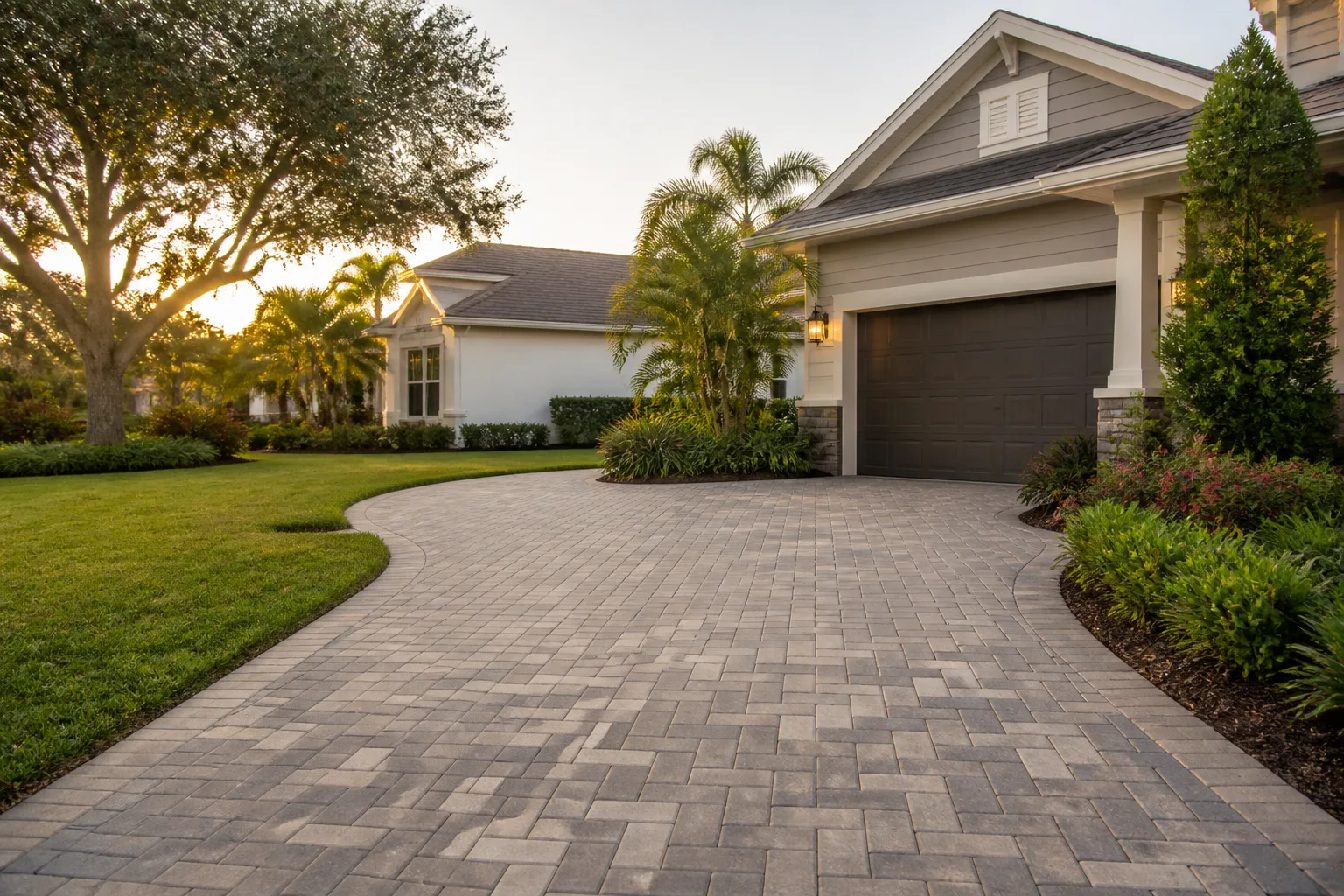
The good news: a paver driveway done correctly won’t show any of these warning signs for a long time. Knowing what to look for in the installation phase keeps you out of the repair-or-rebuild decision entirely.
What a good base looks like:
- Native soil excavated to at least 6 to 8 inches for a residential driveway, deeper if the native soil is soft or contains caliche that wasn’t removed
- Aggregate base placed in lifts of 2 to 3 inches and compacted between each lift – not dumped and compacted all at once
- Compaction tested or at least verified by a plate compactor pass that leaves no visible movement underfoot
- Slope established before pavers go down – 1 to 2 percent away from the house, checked by level, not eyeball
- Edge restraint anchored into the base, not just laid on top – usually with steel spikes or a concrete curb
- Bedding sand layer at about 1 inch, screeded flat, tolerances tight
- Polymeric joint sand applied correctly and wetted per manufacturer instructions, not just dry-swept in
If you’ve had a paver driveway installed and you want to know what to expect going forward, the same principle applies on a smaller scale to fence and perimeter work – see our guide on fence installation in Henderson for the base-and-anchor story that parallels this one.
We use Belgard pavers and other curated material partners because they hold up to Henderson sun, traffic, and the occasional monsoon without early surface deterioration. Combining a properly built base with a quality paver is what makes a driveway last through decades of desert summers. Any material warranty is worth the paper it’s printed on if the base isn’t right, which is why our 730-Day Done Right Promise covers workmanship – the part that fails first when a base isn’t done correctly.
Common Mistakes to Avoid
- Treating a sunken edge as cosmetic. A one-inch dip at the driveway edge looks like a small fix. It’s usually a base failure already spreading. Have it checked before relaying the pavers.
- Skipping the drainage test before calling. Ten minutes with a straight edge and a garden hose tells any contractor more about what’s happening than a phone description. Run the test first.
- Adding topsoil or sand on top of a low spot. This hides the problem, holds water under the pavers longer, and accelerates the failure. Never fill a low spot with loose material; find out where the base has settled.
- Ignoring a spring ridge in Henderson. Caliche heave shows up in spring as a ridge, not a dip. Homeowners who call it settling and lay pavers over it get a repeat problem the next spring. The caliche has to be addressed at the base level.
- Skipping edge restraint regrading after heavy rain. Water carries sand out of joints. After a monsoon, do a quick visual pass along edges for weeds, sand piles, or new gaps. Catching this early prevents a full rebuild later.
- Hiring on the lowest bid without asking about base work. A quote that doesn’t describe base depths, compaction, and edge restraint is a quote for the pavers, not the driveway. The base is where the cost lives.
- Buying cheap pavers to compensate for someone else’s base problems. Better pavers over a failing base don’t fix the driveway. The pavers are the surface; the base is the driveway.
- Waiting until the pavers are visibly broken. Cracked pavers signal the problem is already well past the warning stage. The whole point of learning these signs is catching them while repair is still on the table.
See the difference
 Before
 After
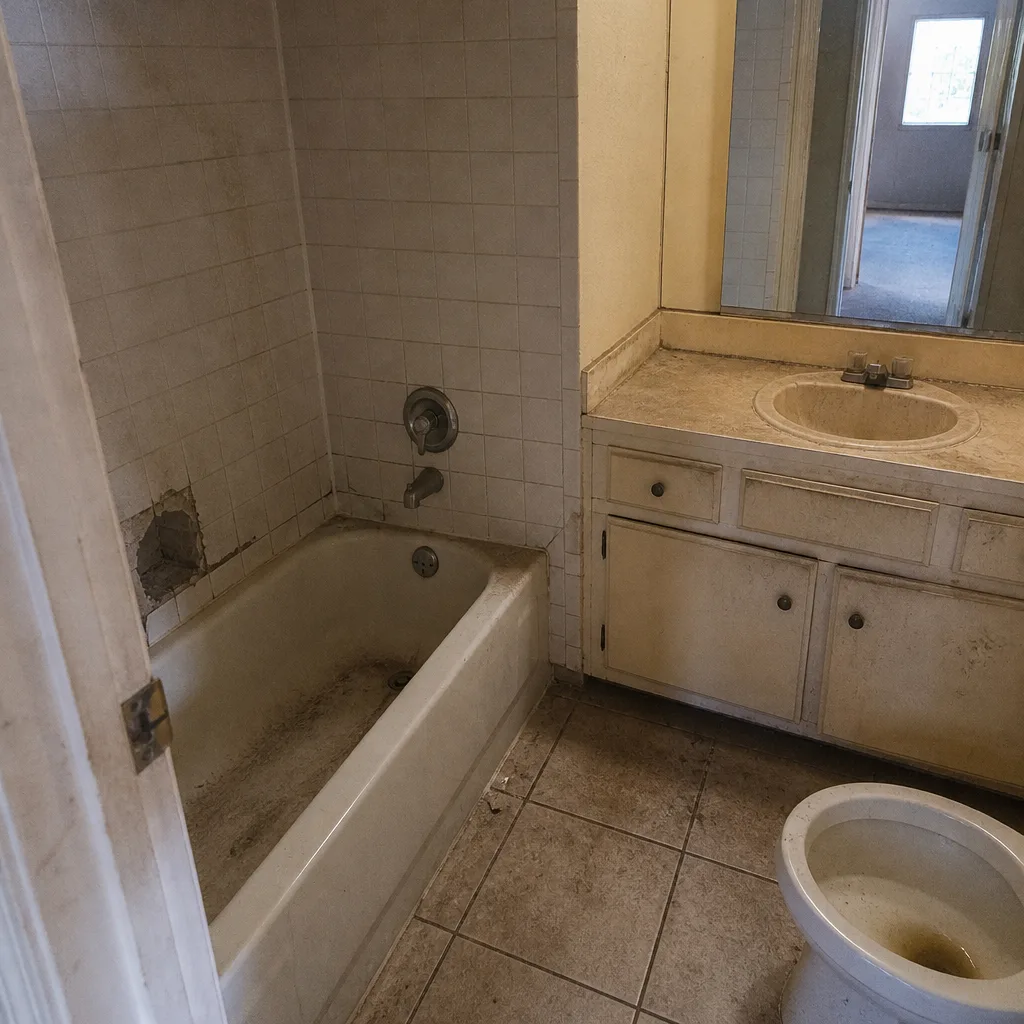 Before
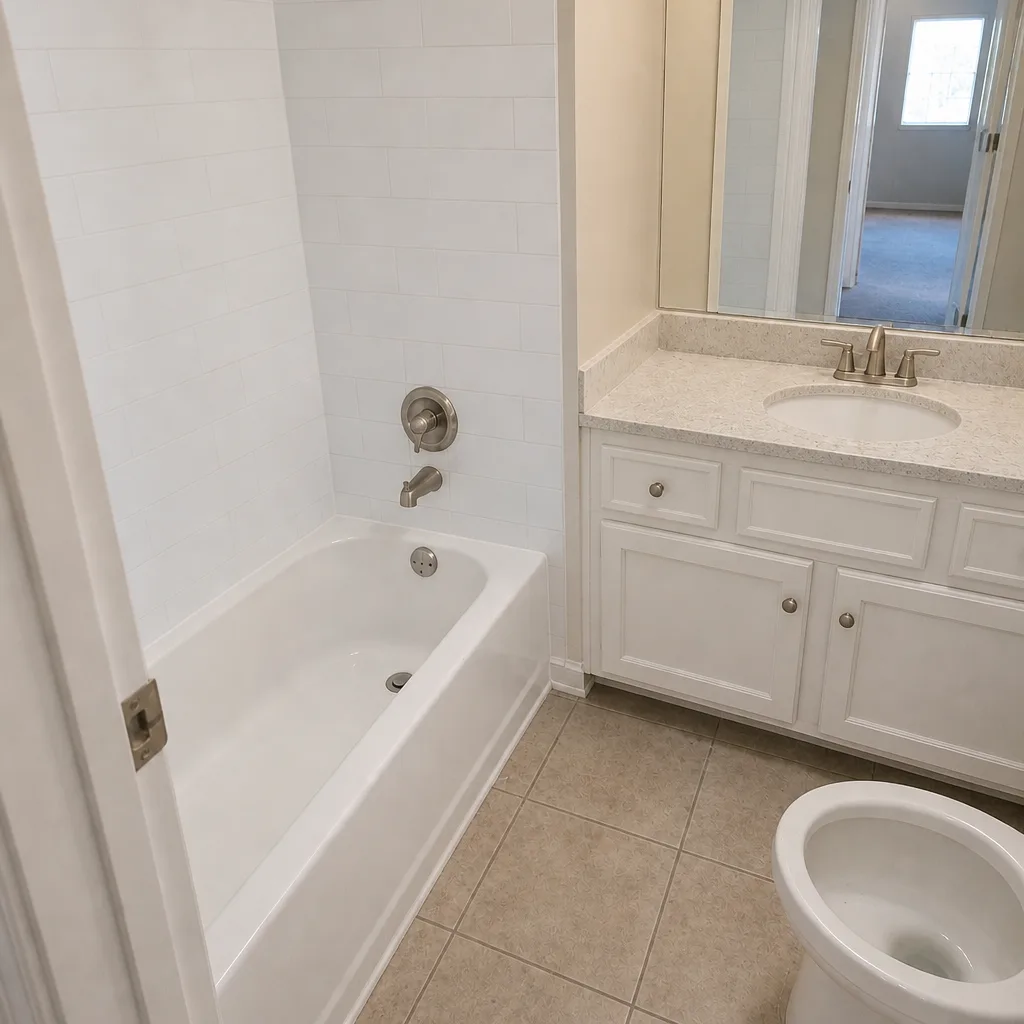 After
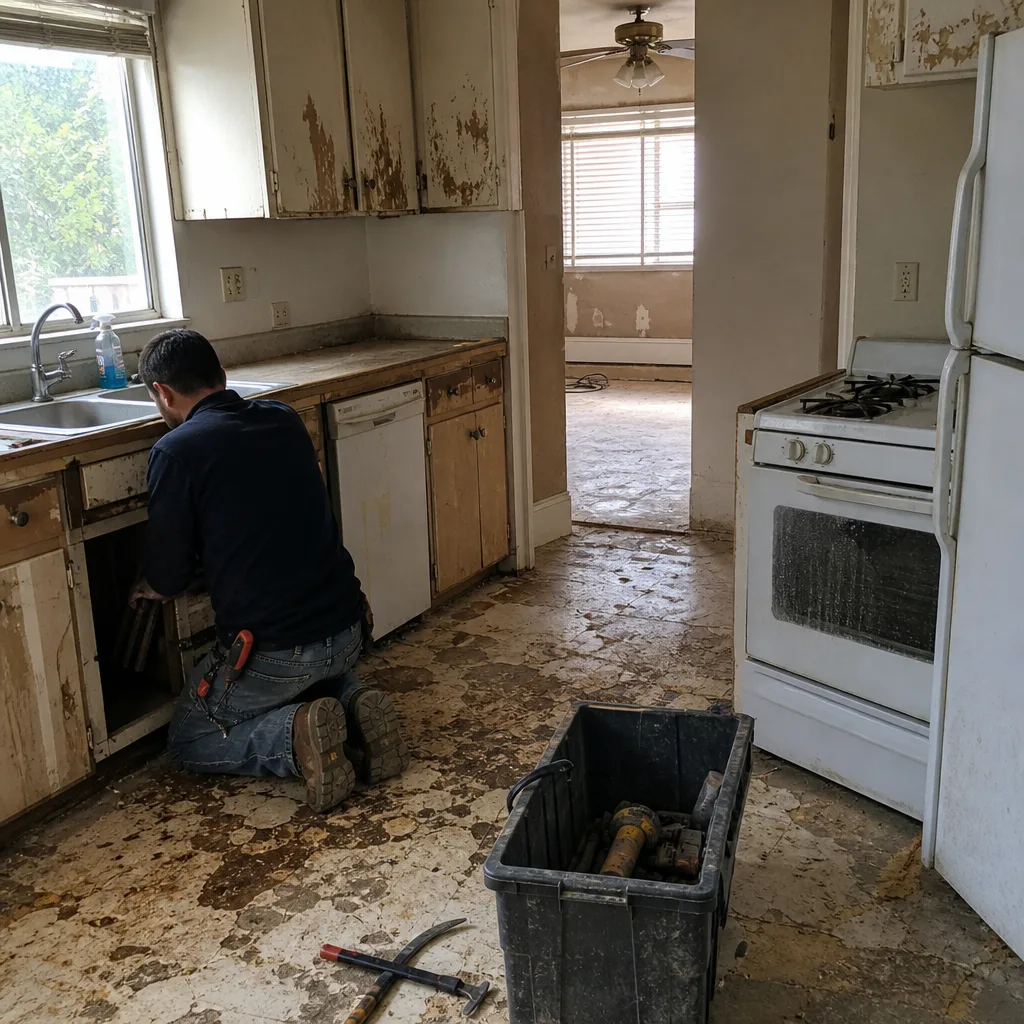 Before
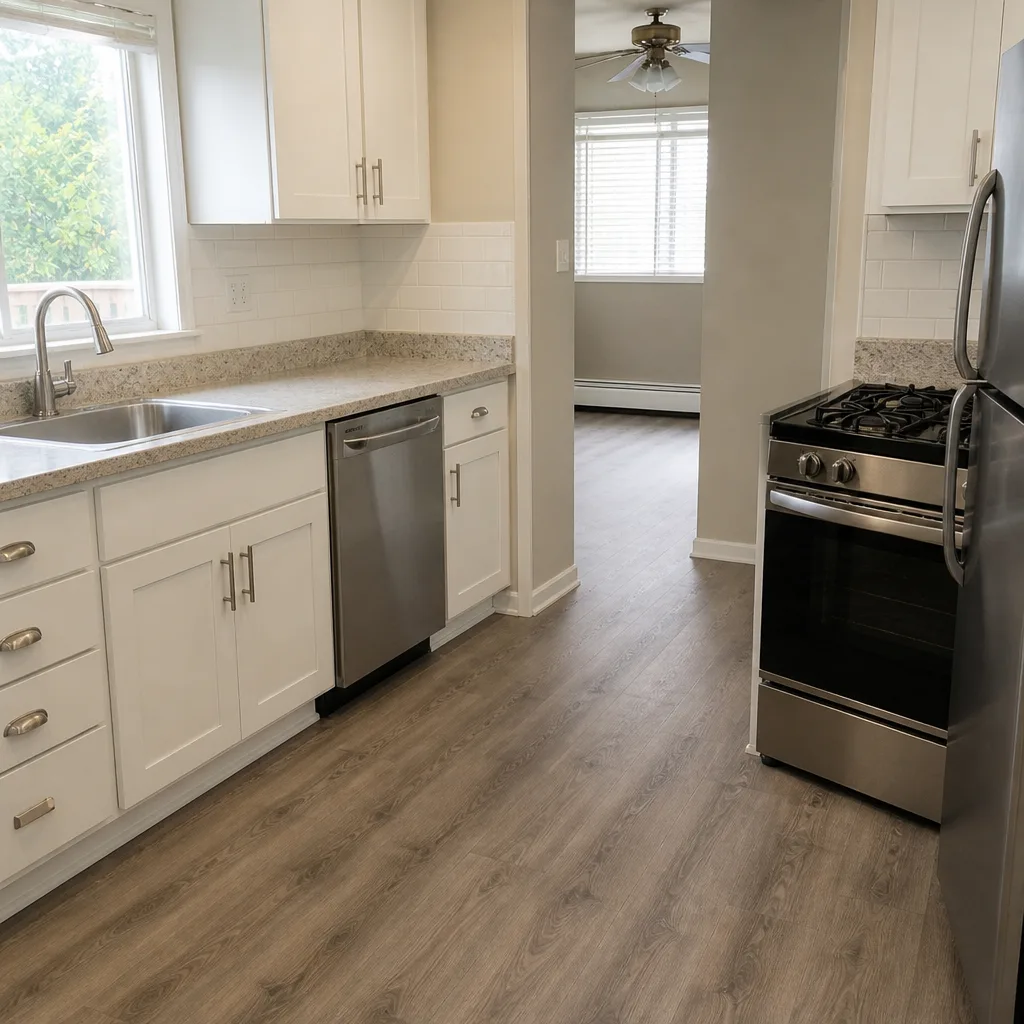 After
When to Call a Professional
Call us when any of these is true: edge creep is visible at the driveway perimeter, three or more pavers are rocking in a cluster, water pools for more than an hour after a Henderson rain, a ridge appeared this spring that wasn’t there last fall, you have visible sand washout along the joints, or the repair-or-rebuild decision has become genuinely unclear. Any of those means the base needs to be looked at directly, which requires lifting pavers.
We don’t send a crew out to sell you a rebuild on a cosmetic problem. We do send someone out to walk the driveway with you, run the drainage test, and tell you which category your driveway is in. Live person, 24/7 on the phone – no voicemail black hole.
Groundwork Construction Co. of Henderson offers free estimates in Henderson – call (844) 320-6757 to schedule one.
Frequently Asked Questions
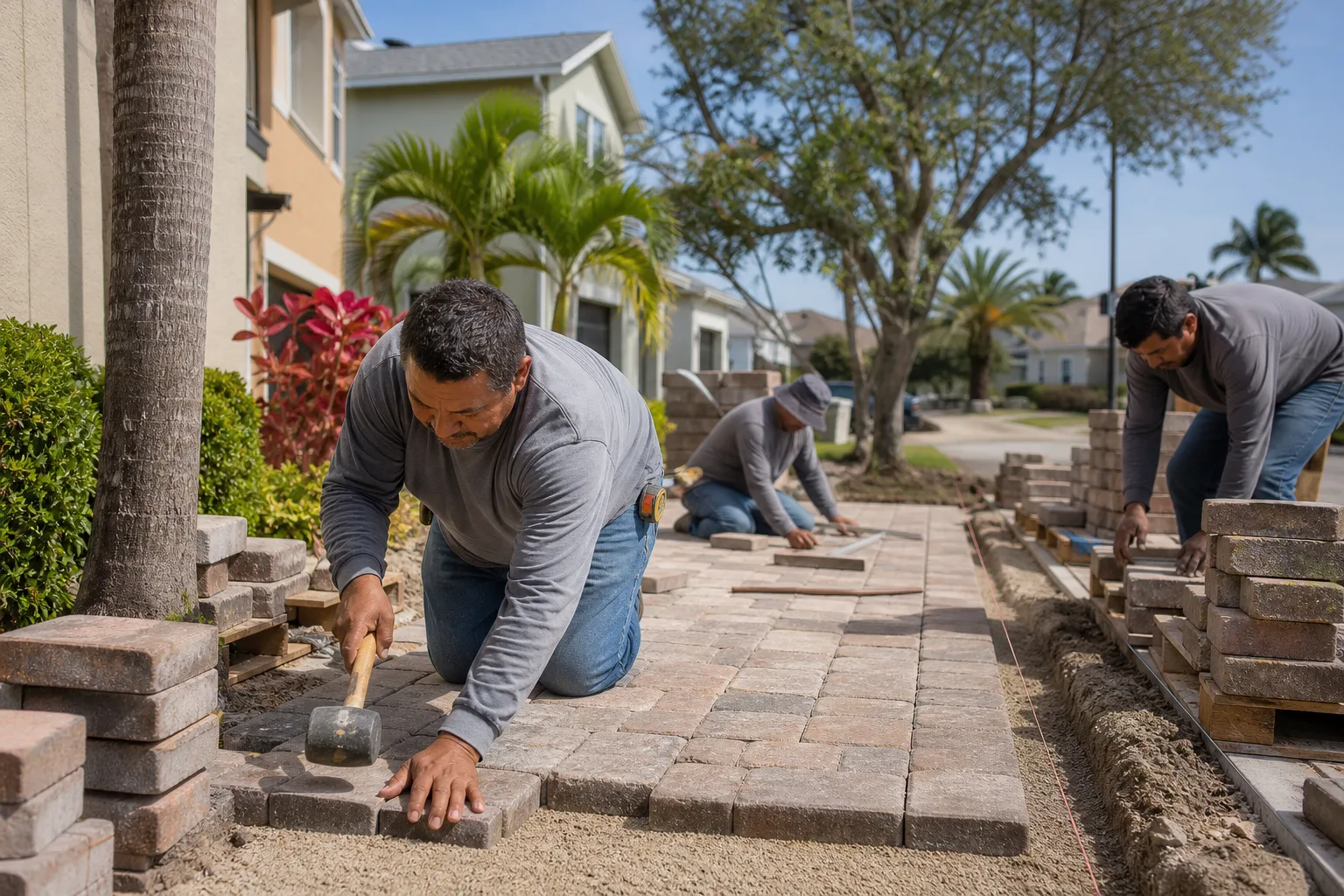
The decision comes down to how much base has failed. A single rocking paver or a low spot smaller than two feet usually means a repair. Edge creep, clustered rocking, pooling water, or caliche heave usually means at least a sectional rebuild. A contractor has to lift a few pavers in the affected area and look at the base directly to tell you which one applies. Call (844) 320-6757 for a free estimate and we’ll walk through the options on-site.
Weeds in pavers mean the joint sand has washed out of that area. The weed is the secondary sign; the primary sign is the soil condition that let the sand leave. Look for visible gaps deeper than 1/4 inch between pavers, or fine sand deposits along the joint line. If the weeds are clustered in one area, that’s a base washout. Call (844) 320-6757 to have it checked before it becomes a rebuild.
Spot repairs in Henderson typically run $200 to $450 for a single paver reset. Sectional repairs with base work run $400 to $1,200. Sectional rebuilds with edge restraint reset run $1,200 to $3,500, and a full driveway rebuild runs $6,000 to $14,000+ depending on size and base depth. Call (844) 320-6757 for an exact quote – estimates are free.
Yes, caliche is common across the Henderson valley and heave is a real risk where driveways were built without treating or adequately removing the caliche layer. It shows up as a ridge or mound that rises in the spring, not a dip. If you see that pattern, don’t treat it as settling. Call (844) 320-6757 to have it assessed before the next rainy season.
Yes. Every project we complete – repair or rebuild – is backed by our 730-Day Done Right Promise. If something we worked on isn’t holding up, we make it right. Call (844) 320-6757 to review warranty specifics for your project type.
Spring and early fall are the practical windows for paver work in Henderson because pavers set into hot summer base sand and polymeric joint sand behave more predictably when the surface temperature is moderate. Summer work is possible (we do it) with adjusted work windows. Fall work should be scheduled early enough to allow the polymeric sand to cure before cooler nights slow the process. Call (844) 320-6757 to plan timing around your project.
The Bottom Line
Paver driveway problems show up on the surface 12 to 18 months after the base has begun to fail. Rocking pavers, edge creep, widening joints, low spots near drains, and surface pitting are the five patterns that matter. Weeds and sand washout tell you why. Caliche heave in Henderson looks like settling but isn’t. The 10-minute drainage test with a straight edge and a garden hose will tell you most of what you need to know about whether your driveway needs attention this week, this month, or next spring. Act on change, not on the calendar.
The $400 repair window closes when the surface cracks. Keep the driveway in the repair window as long as you can by catching the warning signs early and having the base looked at the first time you spot a pattern that doesn’t feel right.
Schedule a Free Estimate in Henderson
If anything in this guide sounds like your driveway, the cheapest next step is to get a professional read on it. Groundwork Construction Co. of Henderson offers free estimates across Henderson, backed by our 730-Day Done Right Promise, no-hassle upfront pricing, and 0% financing for 18 months on qualifying projects. Every technician arrives background-checked and in uniform. Our team uses verified material partners like Belgard for paver work, and our technicians have up to 12 years of experience with desert driveways, caliche, and the specific base conditions that cause the failures covered here.
Call (844) 320-6757 to schedule your free estimate. Live person, 24/7.
Written by the team at Groundwork Construction Co. of Henderson.