Last updated November 18, 2026

Free written scope consultation - allowances, timeline, and change-order rules on paper before a single trade is scheduled
Windows & Doors Warning Signs Every Homeowner Should Know
A window that fogs between the panes isn’t an aesthetic problem. It’s proof the insulating seal is gone, and that window is now performing like a single pane in a city where cooling costs are the single biggest energy expense on your bill. Here’s what we’ve learned after years of replacing glass across Henderson: the failures that cost homeowners the most money are the ones they noticed early and wrote off as minor. This guide maps each early warning sign to what it actually means and what it will cost you if you ignore it, so you can tell the difference between a cheap fix and a five-figure head start.
Quick Answer
The most common signs your windows or doors need attention are fogging between glass panes, drafts you can feel by hand, condensation on the inside of the glass, doors that drag or stick at the strike plate, and visible daylight around a closed frame. Fogging between panes means the sealed glass unit has failed and needs replacement. Dragging doors often point to foundation movement, not a broken door. Acting on these signs within weeks rather than years typically saves $500 to $3,000 per home in energy and repair costs.
Styles & brands we work with
- Kitchen remodeling
- Bathroom remodeling
- Home additions & ADU
- Roofing
- Windows & doors
- Driveway & pavers
- Fence
Table of Contents
- The Five Window and Door Failure Modes (and Henderson’s Role in Each)
- Fogged Glass or HVAC Problem? How to Tell Before You Spend a Dime
- Door Frame Warning Signs That Mean Foundation Movement, Not Door Failure
- The Security Failure Pattern Hiding Behind a “Stiff” Door Lock
- Dust and Hard Water: The Slow Damage Most Henderson Homeowners Never See
- Contractor Red Flags to Watch During the Sales Process
- When to Schedule Replacement in Henderson
- Common Mistakes to Avoid
The Five Window and Door Failure Modes (and Henderson’s Role in Each)
Windows and doors fail in five predictable ways, and Henderson’s climate accelerates every one of them. UV radiation is brutal at our elevation and beats on glass seals year-round. Summer temperatures push past 110°F and winter nights drop near freezing, so frames and glass flex through a wide temperature swing every single day. Monsoon season in July and August dumps rain at a rate that finds every gap. Desert dust grinds into every track and weatherstrip. And our water carries enough dissolved minerals that hardware and glass get a chalky mineral haze if it’s never addressed. Here’s what each failure looks like from the driveway.
1. UV Seal Degradation
The sealed unit inside a modern window (the IGU, or insulated glass unit) contains a perimeter seal that traps argon or krypton gas between two panes. That seal is rubber or butyl based, and southern Nevada UV ages it fast. When it breaks, the gas escapes and moisture gets in. The result is the foggy, cloudy, or water-spotted glass you see from the inside.
2. Thermal Cycling Frame Stress
Every day in Henderson, your frames expand in the sun and contract at night. Vinyl frames can take years of this. Aluminum and wood frames warp sooner, and the seals between frame and glass start to fail. Look for hairline gaps at corners or a frame that no longer sits flush with the wall.
3. Monsoon Water Intrusion
A monsoon storm can drop an inch of rain in under an hour. Any compromised weatherstripping, missing caulk bead, or failed sill pan will let that water in. Water stains on interior drywall below a window are the giveaway.
4. Desert Dust Track Damage
Fines in Henderson’s air are abrasive. Every time a sliding door or window moves, dust trapped in the track acts like sandpaper on rollers, weatherstripping, and the sliding surfaces. Eventually the window drags, the seal is gone, and air comes through freely.
5. Hard Water Mineral Buildup
If you water landscaping near a window or door, hard water sprays onto the glass and hardware. Over a few seasons it etches the coating on hardware finishes and makes glass look permanently cloudy even when it isn’t fogged.
Fogged Glass or HVAC Problem? How to Tell Before You Spend a Dime
This one distinction saves Henderson homeowners thousands of dollars a year in unnecessary window replacements. Foggy glass can come from two completely different problems: a failed IGU seal, which means replace the glass unit, or airborne moisture from indoor humidity, which means fix your HVAC, not your windows. Here’s how to tell them apart reliably.
- Check the location. Moisture trapped between the panes is a failed seal. Moisture on the interior room-facing surface is condensation. That’s a humidity issue and the window is doing its job.
- Look at the pattern. IGU failure typically shows as a uniform haze, a cloudy band, or a visible water line inside the glass. HVAC condensation is usually spread evenly across the interior surface and wipes away.
- Run the HVAC test. On a hot day, keep the house at a steady temperature for 45 minutes with ceiling fans off. If the condensation clears or lessens, the glass is intact.
- Check the seal visually. Failed IGUs sometimes show a warped or wavy inner pane. Physical warping means it’s the glass.
- Use a hygrometer. If indoor relative humidity is over 55%, you likely have an HVAC balance or ventilation issue. A properly running system in Henderson holds 40 to 50%.
- Compare windows. If only one window of ten is fogging, that’s a glass failure. If all ten fog the same morning, that’s a house-level humidity issue.
The financial difference is significant. Replacing a fogged IGU costs roughly $180 to $450 per window in Henderson. Replacing the whole window runs $450 to $1,200 installed. If you’re going to end up in a full replacement anyway because the frames are shot or the windows are 25+ years old, that’s a different conversation. Just don’t call a window contractor for a condensation problem that a $75 HVAC tune-up will solve.
Door Frame Warning Signs That Mean Foundation Movement, Not Door Failure
A door that sticks at the top corner, drags on the threshold, or won’t latch anymore is usually read by homeowners as “the door is broken.” In Henderson’s expansive clay soil zones, that’s often wrong. The door isn’t the problem. The frame has racked because the foundation under it moved. Expansive soils swell after a monsoon and shrink in dry months, and some Henderson subdivisions built on those soils see more movement than others.
Here’s how to tell:
- Check the strike plate gap. A door that latches fine when cool but won’t catch at 4 p.m. suggests movement, not door warp.
- Look at the corner joints. If a door’s mitered corner joints are separating or the door itself is visibly diamond-shaped, the frame has shifted.
- Check the trim. Gaps between interior casing and drywall near the door, or diagonal cracks radiating from the top corners, are foundation signals.
- Check adjacent windows. If a window in the same wall also won’t close cleanly, the wall is moving.
- Look at the exterior. Stair-step cracks in stucco near the door on the outside confirm wall movement.
If two or more of those are true, get a foundation inspection before you buy a new door. Replacing a door on a moving frame won’t fix the latching problem and can void the door warranty. When expansion and movement are confirmed, the right sequence is stabilization first, door replacement after. Our Home Additions & ADU in Henderson team regularly catches this before installation, because a door frame on unstable footing will fail the same way no matter how good the hardware is.
The Security Failure Pattern Hiding Behind a “Stiff” Door Lock
Here’s a failure pattern most homeowners miss entirely. A multi-point lock in an entry door feels stiff when you turn or lift the handle, or it needs a little shove to fully engage. You assume it’s worn. It isn’t worn. What’s happening is the door frame has racked enough that the lock’s multiple engagement points no longer line up with the strike plates. The door still “works” but the lock is only catching one of three or four points.
On a break-in attempt, that means the door fails at a fraction of its rated strength. The deadbolt doesn’t drive home, the top and bottom hooks don’t bite, and the strike plates take the full load on a single point.
Watch for these signs:
- The handle lift or deadbolt turn requires unusual force or a specific lift-and-twist motion.
- You hear a pop or snap when the door closes fully.
- The deadbolt only goes in if the door is pulled tight from the outside.
- Visible wear rings around the strike plates showing load on one side.
- The door no longer swings closed evenly – it drifts or catches on the frame.
Two or more of those is a security-relevant problem, not a wear problem. Adjusting the hinges and re-setting the strike plates is a small job. Replacing the entire unit is a bigger one. Finding out which one you actually need requires eyes on it. Our window and door work includes lock-function and frame-square checks on every job for exactly this reason. If you’ve got a stiff lock, get it checked before you need it to work for real.
Dust and Hard Water: The Slow Damage Most Henderson Homeowners Never See
Desert dust and hard water are slow-motion damage. Neither one produces a dramatic failure, so neither one gets addressed until something breaks. In our experience, this is the single most overlooked cause of premature window and door replacement in Henderson.
Dust gets into sliding door tracks, sliding window tracks, exterior hinges, and weatherstripping. Every time the window opens and closes, the trapped grit abrades the sliding surface. Over two or three years, the roller flattens, the weatherstrip wears through, and now the window drags and no longer seals. Hard water from irrigation spray and hose runoff etches the protective coating on hardware finishes and leaves mineral deposits that look permanent even after cleaning.
What prevents it:
- Vacuum the tracks of sliding doors and windows monthly. A shop vac with a narrow nozzle, 30 seconds per track.
- Wipe weatherstripping with a damp cloth quarterly, and treat rubber seals with a silicone-based protectant (not petroleum jelly – that degrades rubber).
- Wipe hard water off hardware and glass immediately after it lands. Once it’s etched, it’s permanent.
- Adjust irrigation heads so spray doesn’t hit the house directly.
- Check weatherstripping and track seals once a season. Look for brittleness, cracking, or compression memory loss.
Five minutes a month on tracks and seals. That’s the difference between a 20-year window and an 8-year window in a Henderson home. It’s also why we spec hardware finishes carefully – our installations lean on partners like Andersen and Pella for exterior-grade hardware coatings because interior-grade hardware doesn’t survive desert sun and hard water spray here.
Contractor Red Flags to Watch During the Sales Process
Window and door installation is one of the easiest trades to hide problems in. The job looks finished from the driveway even when it’s done wrong, and by the time you find out, months or years have passed and the contractor is long gone. The cheapest way to avoid that is to read the sales process. A contractor’s behavior before the contract tells you almost everything about the behavior after the contract. Here’s what to watch for on the first visit.
- They refuse to put a written scope in the quote. “Standard installation” isn’t a scope. You should see brand, model, glass package (Low-E, argon fill), frame material, flashing details, and what’s included for disposal and trim.
- They don’t mention permits. Henderson requires a permit for most window and door replacements where the opening size changes or the structural framing is touched. If the contractor doesn’t mention permits, ask directly, and expect a yes or a specific reason for a no.
- They quote without measuring. A real quote requires measuring every opening. If the salesperson asked you for rough dimensions over the phone and handed you a price, that’s a red flag.
- They don’t inspect the existing frames. The most common reason replacement windows leak is unseen rot or shifted framing behind the old unit. A contractor who doesn’t look at the frames before quoting hasn’t seen the real project.
- Their warranty is short or vague. Anything less than 10 years on labor isn’t a serious warranty in this trade. Ours is the 730-Day Done Right Promise – if something isn’t right, we make it right, and that guarantee applies regardless of who installed it for us.
- They pressure you on timeline. “This price is only good today” is a sales tactic. Quality contractors can hold a quote for a week.
- They never talk about what happens if there’s a leak. Ask “who do I call in a rainstorm if this window starts leaking?” and see what answer you get.
None of those are dealbreakers on their own. All of them together, or any one of them appearing alongside a strange price, means walk. This is the kind of front-end scrutiny that lives behind our Groundwork Construction Co. of Henderson home ethos on every trade – upfront pricing, no surprises, so a quote means the same thing on day one and day last.
When to Schedule Replacement in Henderson
Timing matters more in Henderson than most homeowners expect. Window and door replacements are best done when the temperature is moderate, meaning late March through May and late September through November. Not because the work is unsafe in July, but because the highest-quality sealants and caulks cure best between 60°F and 80°F, and installing in 110°F heat means the sealant skins over before it fully bonds to the frame – one of the reasons leaky replacements happen in this market.
If you’re scheduling in summer, that’s fine. Just ask the installer how they handle sealant working time. Some contractors will plan the work for early morning. Others won’t, and you’ll get window frames that look fine but leak during the first monsoon.
Monsoon season (July through September) is the worst time to replace sealing systems. If a leak is already happening, get an emergency evaluation – replacement can happen after the monsoon or between storms, but the leak can’t wait. If your timeline is flexible, spring and fall are the right windows of the calendar for this work.
One more thing: lead times. Custom-sized windows from brands like Marvin and Pella run 6 to 12 weeks in most Henderson replacements. Getting the order placed in January for a March install means the work happens on your schedule, not the manufacturer’s. Our Driveway & Pavers in Henderson and Fence Installation in Henderson crews see the same seasonal bottleneck, and it’s why we build the lead time into every project estimate upfront.
Common Mistakes to Avoid
- Replacing the glass when the frame is the problem. A new IGU in a warped frame leaks within a season. Fix the frame or replace the unit – don’t halfway it.
- Chalking a monsoon leak up to “bad weather.” If a window leaks, the seal has failed. It will get worse every rainy season and inside drywall eventually grows mold.
- Ignoring a stiff door lock as routine wear. A stiff multi-point lock is a security issue. It’s the cheapest fix you’ll ever make on a door, but only if you catch it before you need the door to work.
- Hiring a window “specialist” who only sells windows. If a door is dragging because the foundation moved, a window-only contractor will replace the door and leave you with the same problem six months later.
- Buying the cheapest window on the showroom floor. In Henderson’s UV climate, a low-quality Low-E coating will degrade in five to seven years and you’ll be back to foggy glass. The upfront savings get eaten by the second replacement.
- Skipping the permit to save a few hundred dollars. Unpermitted replacement work can complicate a future sale, void manufacturer warranties, and leave you exposed if the failure is structural.
- Scheduling installation during monsoon season. Sealants won’t cure correctly and one rainstorm during installation can compromise the whole sealing system.
See the difference
 Before
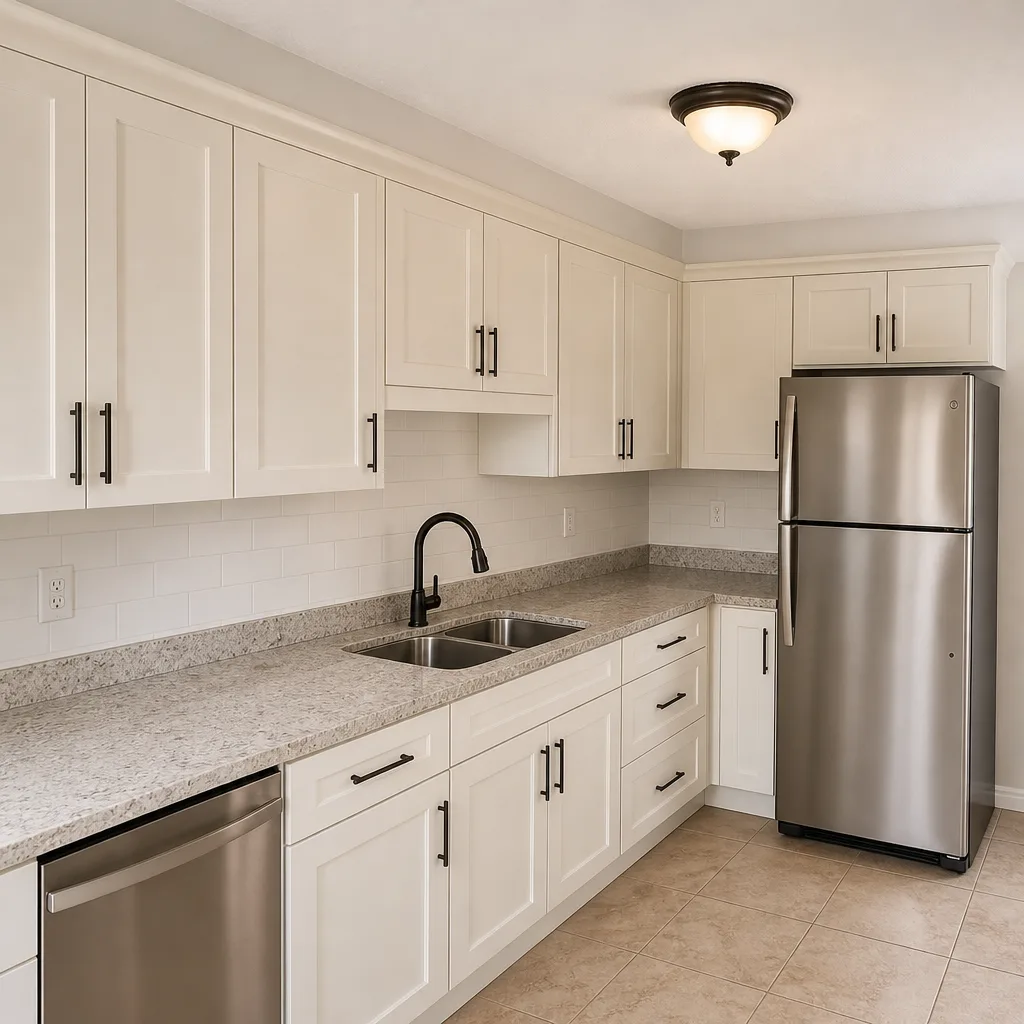 After
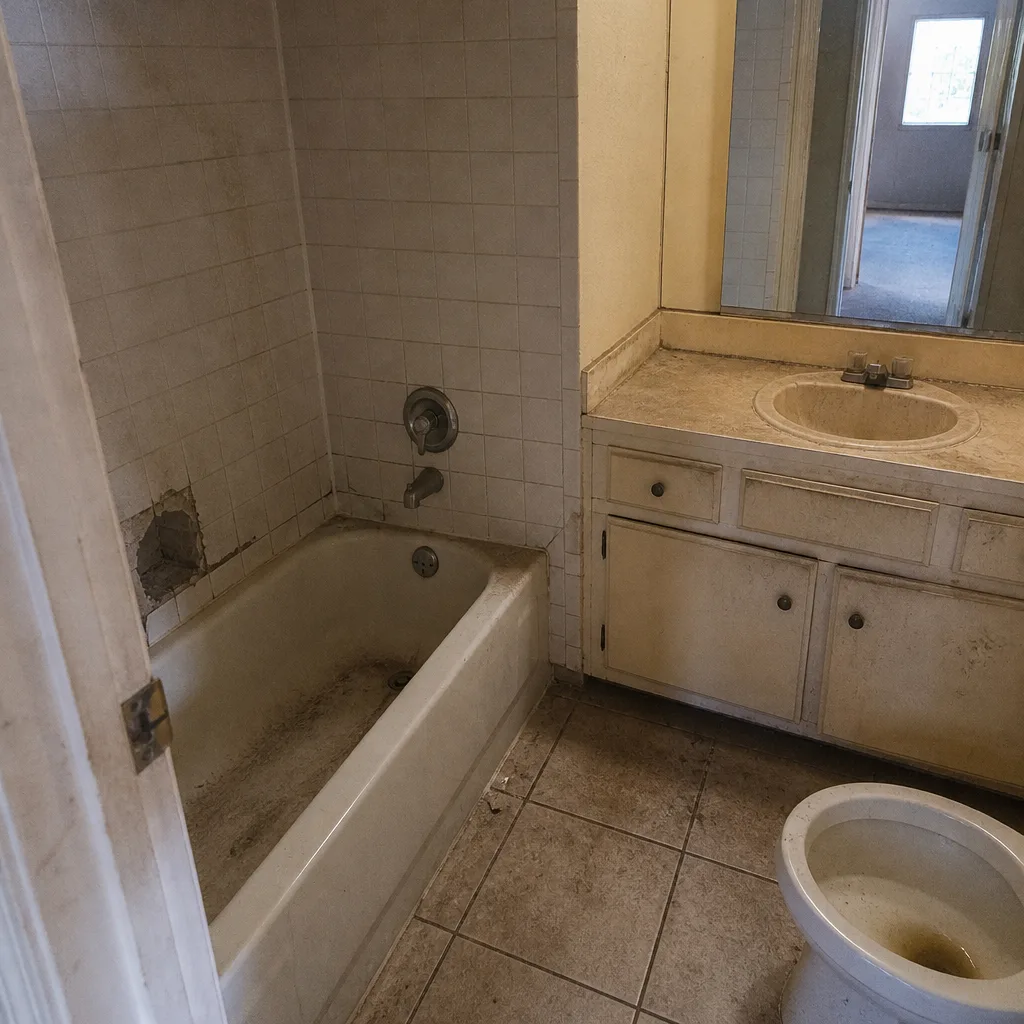 Before
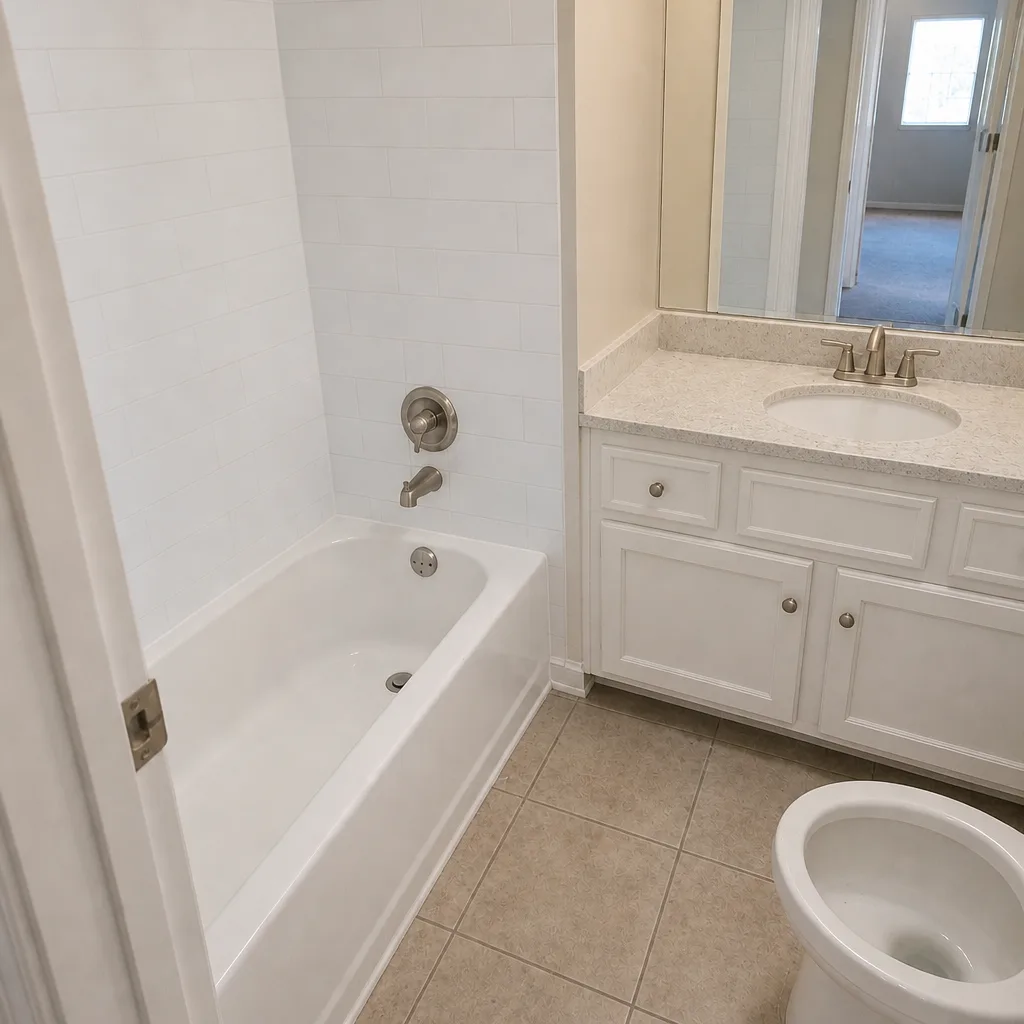 After
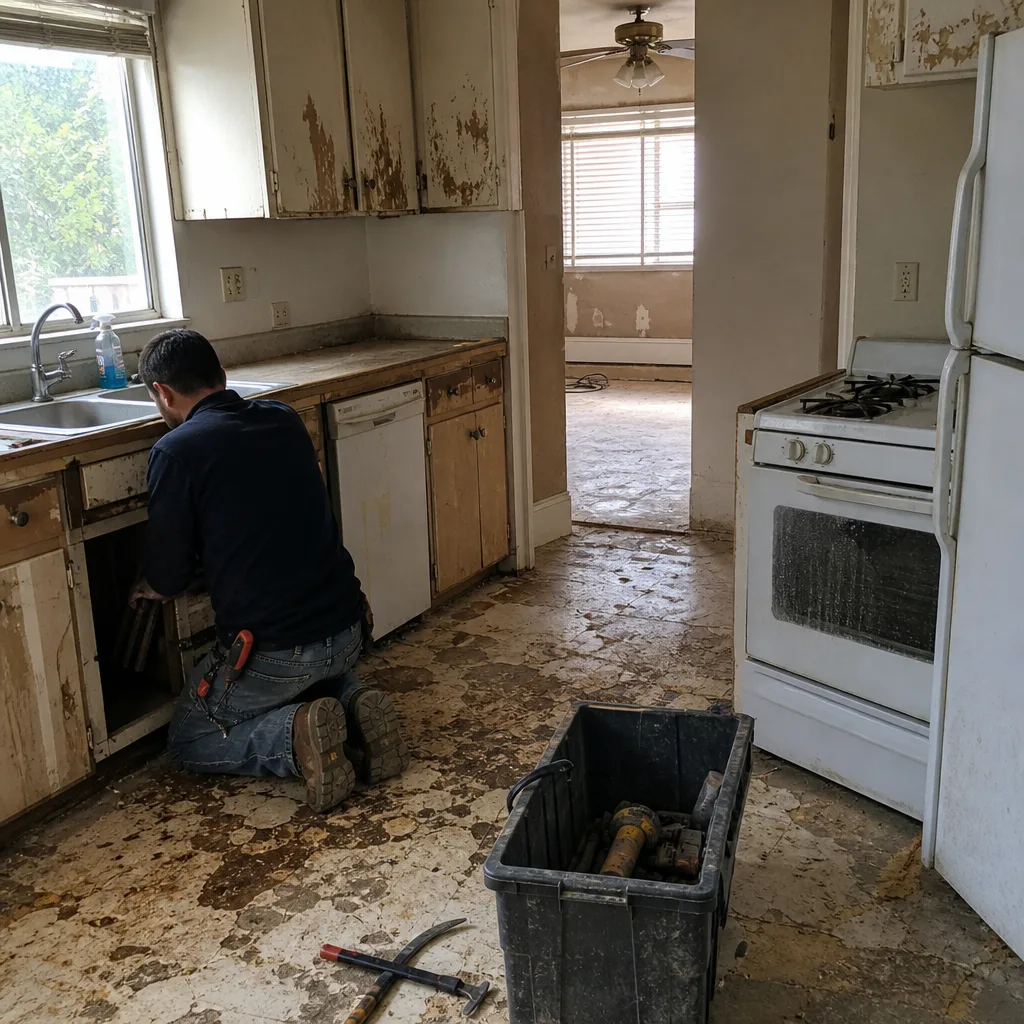 Before
 After
When to Call a Professional
Call for a professional inspection the moment any of these are true: you can see daylight around a closed door or window; a fogged pane appears between the glass; a door drags at the top corner or won’t latch; a multi-point lock feels stiff or requires extra force; water stains appear on interior drywall below a window; or one exterior frame is visibly warped or shifted from the wall. Each of those alone is a modest repair. Left for a year, any of them becomes a $2,000 to $8,000 problem because the water has already gotten in or the frame has already moved. Groundwork Construction Co. of Henderson offers free estimates in Henderson – call (844) 320-6757 and we’ll send out a technician who measures, inspects the frame, and gives you a written scope before you decide anything.
Our team is background-checked and uniformed on every job, and we keep phone coverage live 24/7 so a quick call actually gets a human being, not a voicemail that calls back next Tuesday.
Frequently Asked Questions
Window replacement in Henderson runs roughly $450 to $1,200 per window installed, with the Henderson average around $700 for a standard double-hung replacement. Full-frame replacements where the frame is also being replaced cost more, typically $800 to $1,500 per window. Replacing just the glass (IGU) unit costs $180 to $450 per window and is the cheaper option when the frame is sound. Call (844) 320-6757 for an exact quote – estimates are free.
A broken window seal shows as fog, haze, or visible water droplets between the two panes of glass. If you can wipe it off from the inside, it’s condensation on the interior surface and the glass is intact. If it’s trapped in the glass, the sealed unit has failed and needs replacement. The test takes about 30 seconds per window.
Sometimes, yes. A door that sticks at the top corner, drags heavily on the threshold, or won’t latch after years of working fine is a foundation movement signal in Henderson’s expansive clay areas. The door itself is rarely the problem. Two or more signs across the home, especially along with cracks near the door frame, warrant a foundation inspection before you replace anything.
Vinyl frames with a quality Low-E glass package, argon fill, and a warm-edge spacer are the most common and cost-effective choice in Henderson. Aluminum frames can perform well with a thermal break but struggle in our summer sun. Wood frames look great but need more upkeep against UV. The right window depends on the wall it’s going into – this is where brand matters as much as spec. Our installations use Andersen and Pella exterior-grade hardware for exactly this reason.
A typical Henderson home replacement of 8 to 12 windows takes one to three days, and a door replacement takes two to five hours per door once the opening is prepped. Custom-ordered windows from brands like Marvin carry 6 to 12 week lead times before installation starts. Most of our installs are single-day per opening, but plan for the full project timeline when you schedule.
Henderson requires a permit when the replacement changes the size of the opening, modifies structural framing, or requires new rough openings. Like-for-like replacements in the same opening sometimes don’t require a permit – it depends on the scope. We tell you upfront whether your project needs one, pull it for you when it does, and pass the inspection. Call (844) 320-6757 and we’ll walk through the specific project with you – estimates are free.
The Bottom Line
Most expensive window and door failures in Henderson were visible for years before they became expensive. Fogged glass, stiff locks, dragging doors, and water stains each have a specific meaning, and each one has a right fix and a wrong fix. The wrong fix is usually cheaper for a season and costs more over five years. Read the signs early, distinguish glass failure from HVAC humidity issues, get a foundation check before you replace a dragging door, and pick a contractor who gives you a written scope, mentions permits, and measures before quoting. That combination is the only one that keeps a window or door replacement from becoming a second project. Written by the team at Groundwork Construction Co. of Henderson.
Written by the team at Groundwork Construction Co. of Henderson.
Call (844) 320-6757 for a free estimate on windows, doors, or any full-scope home project in Henderson. From foundation to finish line.